Symptom Guides
Freezer Frost Buildup: 5 Causes
By Michael Smith — Head Technician · September 22, 2026 · 7 min read
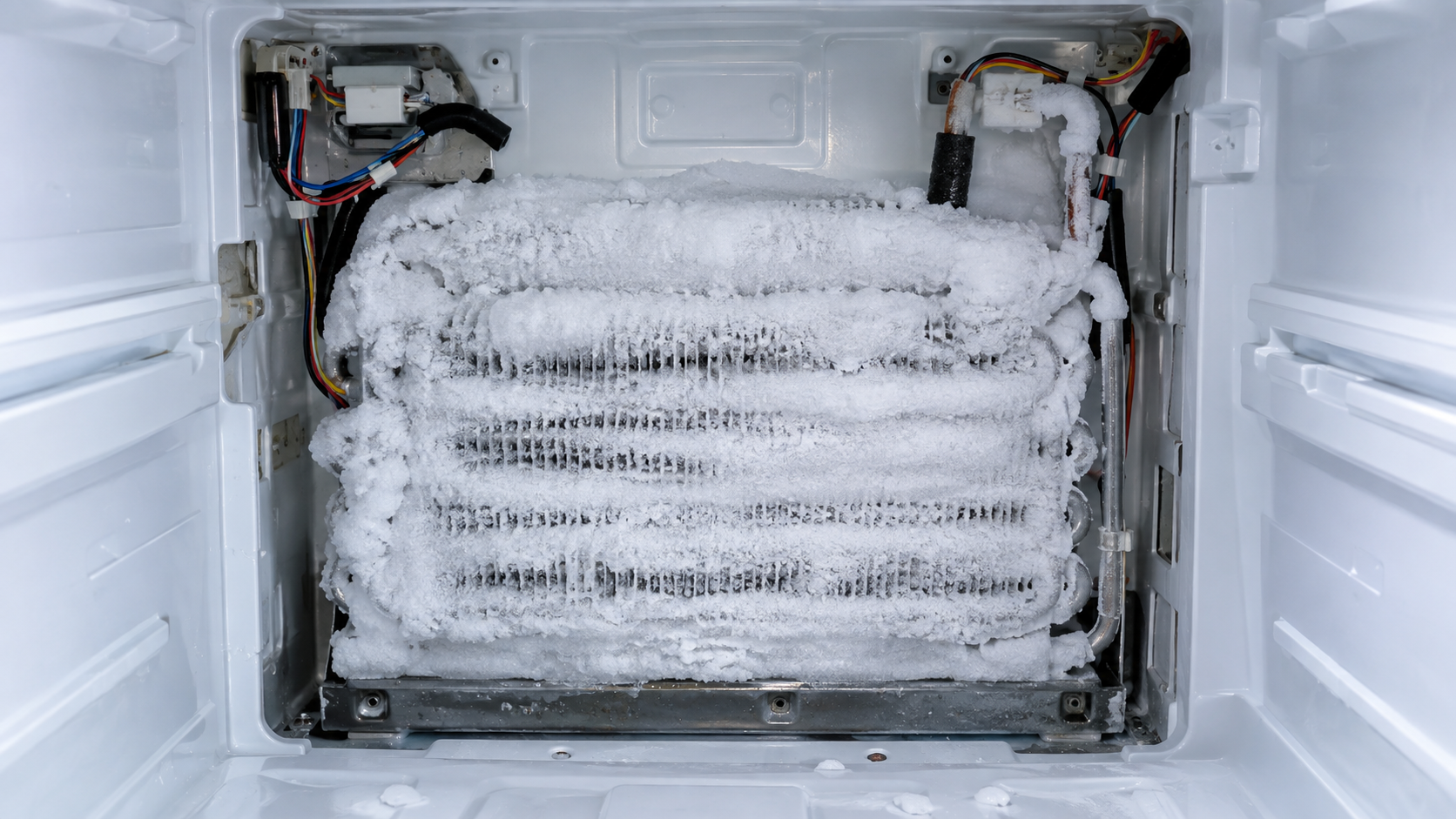
Freezer frost buildup usually means humid air is getting in or the automatic defrost cycle has stopped working. A worn door seal, a failed defrost heater, or a blocked drain tube cause most cases. If frost returns within days of clearing it, the defrost system rather than the door is the likely fault.
What Freezer Frost Buildup Actually Tells You
Frost inside a freezer is water vapour that has condensed and frozen on the coldest surface it can find. Some of that is unavoidable: every time the door opens, room air carrying moisture enters, and a thin, even coating on packages is normal. Freezer frost buildup becomes a diagnostic symptom when it is heavy, when it concentrates in one place, or when it comes back quickly after you clear it. Those three patterns point in different directions. Heavy frost across everything suggests air getting in continuously. Frost concentrated on the rear wall suggests the defrost system. Frost that returns within a week of a full manual defrost suggests the same thing more strongly, because a healthy frost-free freezer should stay clear for years.
The Five Causes, in Order
A Door Seal That No Longer Seals
The most common cause, and the easiest to test. Close the door on a sheet of paper and pull: real resistance means the door seal is gripping, and easy release means it is not. Check several points around the frame, because gaskets usually fail at a corner or along the hinge side first. A freezer door that is slightly out of alignment, or one whose gasket has stiffened with age, admits humid air continuously — which is exactly the fuel frost needs.
A Failed Defrost Heater
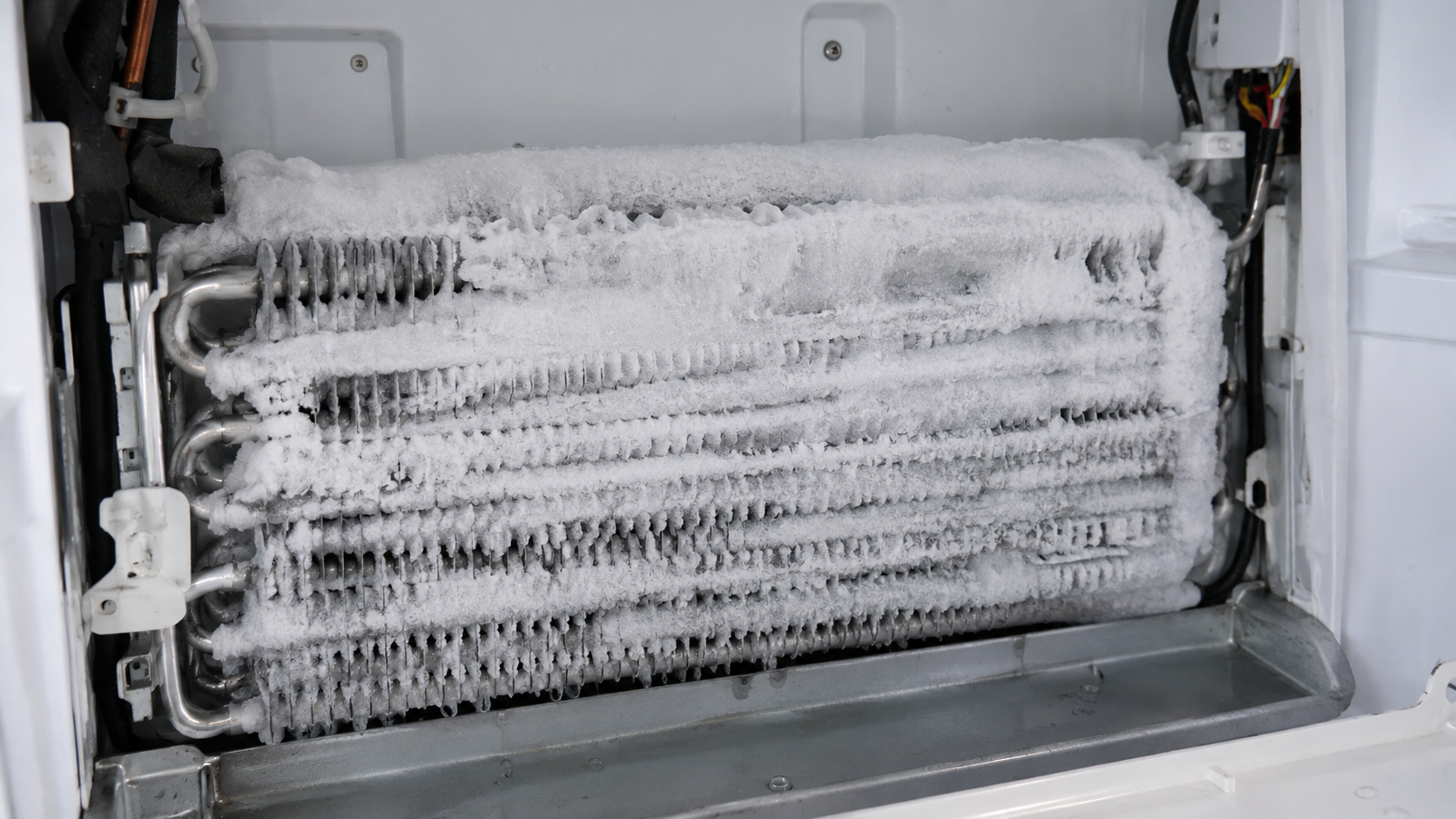
Frost-free freezers work by allowing frost to form on the evaporator coil and then melting it off with a small defrost heater on a scheduled cycle. When that heater fails, frost accumulates on the coil until airflow is choked, at which point the freezer begins to warm even though the compressor runs constantly. The classic sign is a solid sheet of ice across the rear panel with poor cooling that developed gradually over weeks.
A Failed Defrost Thermostat or Control
The heater is only half the system. A defrost thermostat confirms the coil is cold enough to need a defrost cycle, and a timer or control board decides when to run it. Either can fail while the heater itself is perfectly good, producing identical symptoms. This is why the defrost system is diagnosed as a circuit rather than a part, and why replacing the heater alone sometimes fails to fix anything.
A Drain Tube Frozen Shut
Melted frost has to go somewhere. It drains through a small tube to a pan near the compressor, where it evaporates. When that tube freezes shut, meltwater backs up, refreezes at the bottom of the compartment, and builds a slab of ice under the drawers. If you are chipping ice off the freezer floor rather than the walls, this is almost certainly your cause, and it often coexists with water appearing under the crisper drawers in the refrigerator above.
Humidity and How the Freezer Is Loaded
Behaviour matters more than people expect. A freezer opened frequently on a humid August afternoon takes in far more moisture than the same freezer in January. Warm food placed inside before cooling releases moisture directly into the compartment. Packages pushed against the rear vents block the airflow the defrost design assumes, creating a local cold spot where frost forms first. None of these is a fault, but all of them accelerate one.
Frost-Free Does Not Mean Frost-Proof
The term causes real confusion. A frost-free freezer is not a freezer in which frost cannot form; it is one that melts accumulated frost automatically on a schedule. That distinction explains why a frost-free unit still shows light frost, and why it is not automatically broken when it does. It also explains the failure mode: when the automatic part stops working, the frost that the design expects to appear simply never gets removed, and what would have been an invisible cycle becomes a visible ice problem within a few weeks. Manual-defrost chest freezers are different appliances entirely — they expect you to clear the ice yourself once or twice a year, and half an inch of buildup on the walls is normal rather than a symptom.
Chest Freezers in Garages and Basements Around Clifton
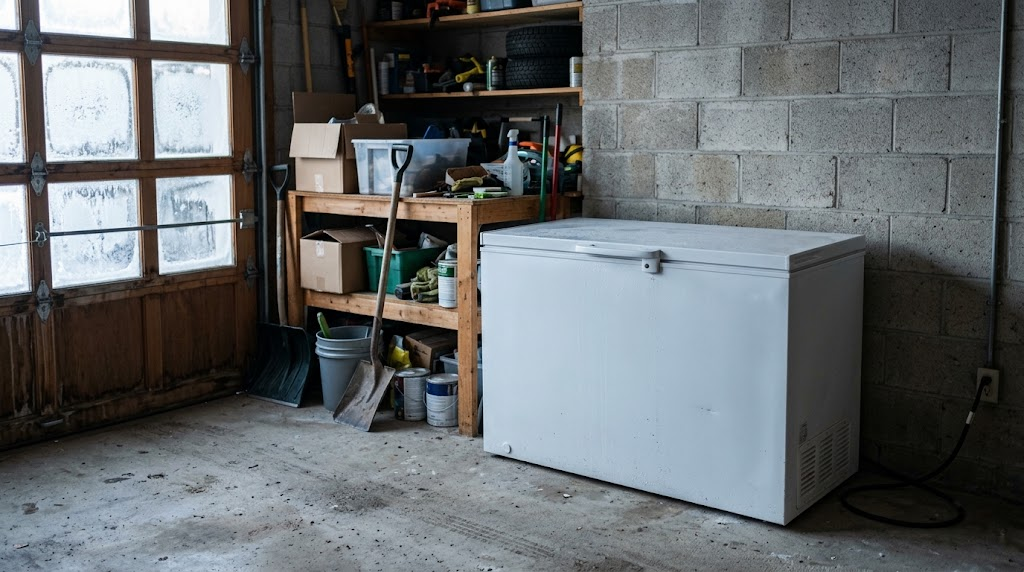
Second freezers in Clifton, Paterson and Wayne usually live in a garage, a basement or an unheated utility room, and the surrounding environment changes how they behave in both directions. In a humid basement in August, every door opening admits far more moisture than the same freezer would see in a conditioned kitchen, so frost accumulates faster and the defrost cycle has more work to do. Running a dehumidifier in that space does more for the freezer than any adjustment to the appliance itself.
Winter brings the opposite problem in an unheated garage. Most household refrigerator-freezers are designed to operate in an ambient range of roughly 60 to 90 degrees, and the thermostat that starts the compressor sits in the fresh-food compartment rather than the freezer. When the room drops near freezing, that thermostat is satisfied without the compressor running, so the freezer section slowly warms and softens. A dedicated chest freezer is generally more tolerant of cold rooms than a combination unit, which is worth knowing before putting a spare refrigerator in an unheated garage and expecting it to keep food frozen in January.
What Frost Costs You, and the Temperature That Matters
Frost is not just untidy. A coated evaporator coil cannot transfer heat efficiently, so the compressor runs longer for the same result, which raises running costs and shortens the appliance's life. Heavy frost also displaces usable space and makes drawers stick. More importantly, once airflow is choked, the compartment temperature rises, and food safety depends on a freezer holding at or below zero degrees Fahrenheit. Food stored above that stays frozen but loses quality faster, and a freezer drifting into the teens without anyone noticing is a genuine risk to a large stock of food.
A cheap appliance thermometer left in the compartment answers this permanently. If it reads near zero, frost is a maintenance nuisance. If it reads in the teens or higher while frost is present, the defrost system has already begun to affect cooling and the repair is no longer optional. Dial settings are not a substitute for this measurement: a numbered dial from one to seven tells you nothing about actual temperature, and a freezer can sit several degrees off its setting for years without anyone noticing until food quality starts to suffer.
When to Call
Do the accessible things first. Test the gasket with a sheet of paper, clean it with warm soapy water since sticky residue prevents sealing, check that nothing is blocking the rear vents, and confirm the door is not being held fractionally open by an overfull drawer. If frost is on the floor rather than the walls, look for a blocked drain tube. A full manual defrost — unplug, empty, leave the door open with towels down for several hours — will also tell you something useful: if heavy frost returns within a week or two, the defrost system is faulty rather than the door.
That is the point at which testing is needed rather than guessing, because the heater, the thermostat and the control board produce the same symptom and only a meter distinguishes them. Booking a freezer repair at that stage costs less than the slow version, where a choked coil pushes the compressor to run continuously for months before anyone treats it as a fault. Keep a thermometer in the compartment afterwards — it is the cheapest early warning available for every problem on this list.
- freezer
- frost
- defrost heater
- door seal
- clifton