Service
Dryer Repair Across North Jersey, Rockland, Westchester & Fairfield
Licensed, insured & backed by a 12-month warranty
Dryer repair for electric and gas units, including no-heat faults, long dry times, drum rollers, and vent restrictions.
5.0 from 36 Google reviewsBefore you book
Common dryer problems
Before you book, it helps to know what actually tends to go wrong. These are the dryer faults we see most often, what typically causes each one, and what it means for you — not a diagnosis, just a plain-language starting point.
Heating element failure (electric) vs. igniter failure (gas)
Electric dryers heat with a resistive heating element that can burn out the same way any heating element eventually does; gas dryers instead use an igniter that has to glow hot enough, for long enough, to open the gas valve and light the burner. Both faults produce the identical customer-facing symptom — a dryer that tumbles, runs, and sounds normal but never actually gets hot — yet they're different parts on different fuel types, which is why knowing whether you have a gas or electric dryer matters before the visit.
Thermal fuse trips from vent restriction
A dryer's thermal fuse is a one-time safety device that permanently cuts power to the heating circuit if the dryer starts running hotter than it's designed to — almost always because a blocked or crushed exhaust vent is trapping hot, moist air instead of letting it escape outside. The dryer then reads to the owner as simply "stopped working," but replacing the fuse without also clearing the vent just resets the same failure to happen again.
Drum belt failure
The belt that wraps around the drum and turns it can crack, stretch, or snap outright after enough years of normal cycling. When it fails, the motor keeps running exactly as before, but the drum itself stops turning — often noticeable as a distinct silence where the tumbling sound should be, sometimes preceded by a faint burning-rubber smell in the last cycle or two before it finally gives out.
Drum roller wear
A rhythmic thumping or squeaking noise that rises and falls in time with the drum's rotation usually points to worn drum support rollers, or the glides and felt seals around them, rather than the motor or belt. It's an ordinary wear item on any dryer that's seen several years of regular use, and it's a straightforward repair once isolated from the other, louder-sounding faults it can be mistaken for.
Moisture sensor faults
Dryers with an automatic or sensor-dry cycle rely on a moisture sensor strip inside the drum to decide when the load is actually dry and end the cycle. A dirty sensor — coated with the same fabric-softener residue that builds up on everything else in the drum — or a failing one can end cycles too early, leaving clothes damp, or run the dryer far longer than necessary, which often gets mistaken for a heating problem when the heating system itself is working fine.
Not sure yet
Still identifying the fault?
You don't have to diagnose it yourself — but if you want to narrow it down first, our dryer guide walks through what each symptom usually means and whether it's worth repairing.
Diagnose your dryerOn site
What the visit looks like
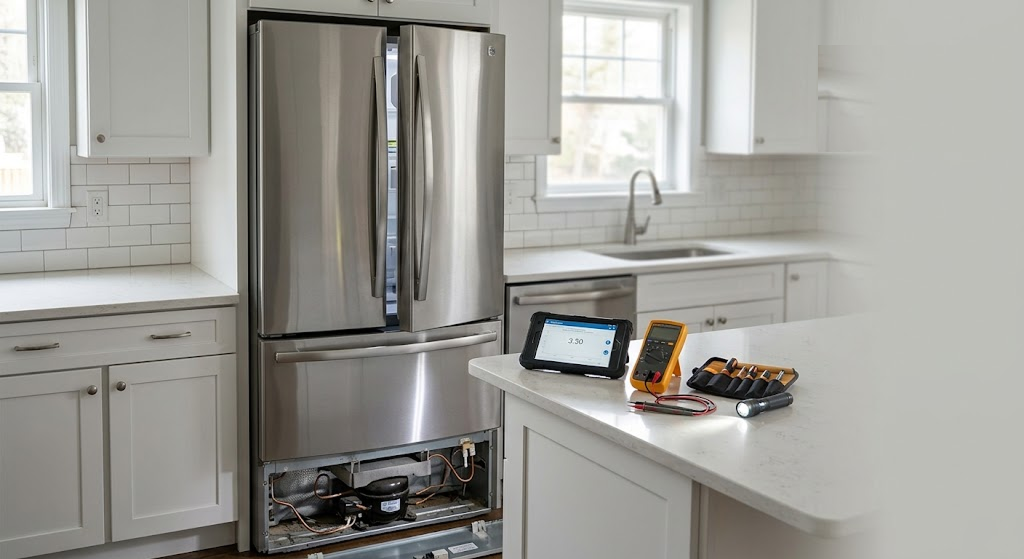
Your technician arrives inside the agreed window, in a marked vehicle and with photo identification. You get their name and photo by text before they set off.
They diagnose the fault, explain in plain language what has failed, and hand you a written estimate. Nothing proceeds until you approve it.
Most repairs finish in the same visit. Where a part has to be ordered we book the return before leaving, and you are not charged a second diagnostic.
Process
How the repair works
- 1
Tell us what's wrong
Call or book online in under three minutes. A photo of the model plate speeds things up.
- 2
Pick a 3-hour window
Real availability including same-day. We text when your technician is on the way.
- 3
We diagnose and quote
We diagnose the fault first. Written estimate before any work starts.
- 4
Approve — we fix it
Most repairs finish the same visit, backed by a 12-month warranty.
Included
What every repair includes
- 12-month parts and labor warranty
- Written estimate before work begins
- Background-checked, uniformed technician
- Licensed and insured
- Clean-up after the repair
- Invoice emailed with a secure pay link
Brands
Brands we service for dryer repair
Factory training on premium built-ins, and strong parts availability across the mainstream lines.
Questions
Dryer Repair FAQ
How much does dryer repair cost?
Cost depends on what's actually wrong, so SOS Appliance Repair diagnoses before quoting rather than pricing blind over the phone or online. Call us to talk through pricing for your situation, and you'll always get a written estimate on site before any work begins.
How quickly can you carry out dryer repair?
SOS Appliance Repair offers same-day dryer repair across our six-county service area in New Jersey, New York and Connecticut when you book before 2 PM.
Is dryer repair covered by a warranty?
Every dryer repair performed by SOS Appliance Repair carries a 12-month warranty on both parts and labor, stated in writing on your invoice. If the same fault returns within that period we come back at no charge.
Related
Other services
Same-day appointments available
Broken appliance? We can be there today.
Talk to the company that actually sends the technician — no lead brokers, no bidding wars, no runaround.
- Licensed & insured
- 12-month warranty
- Background-checked technicians