Symptom Guides
Oven Not Heating Evenly? 6 Causes
By Michael Smith — Head Technician · September 19, 2026 · 7 min read
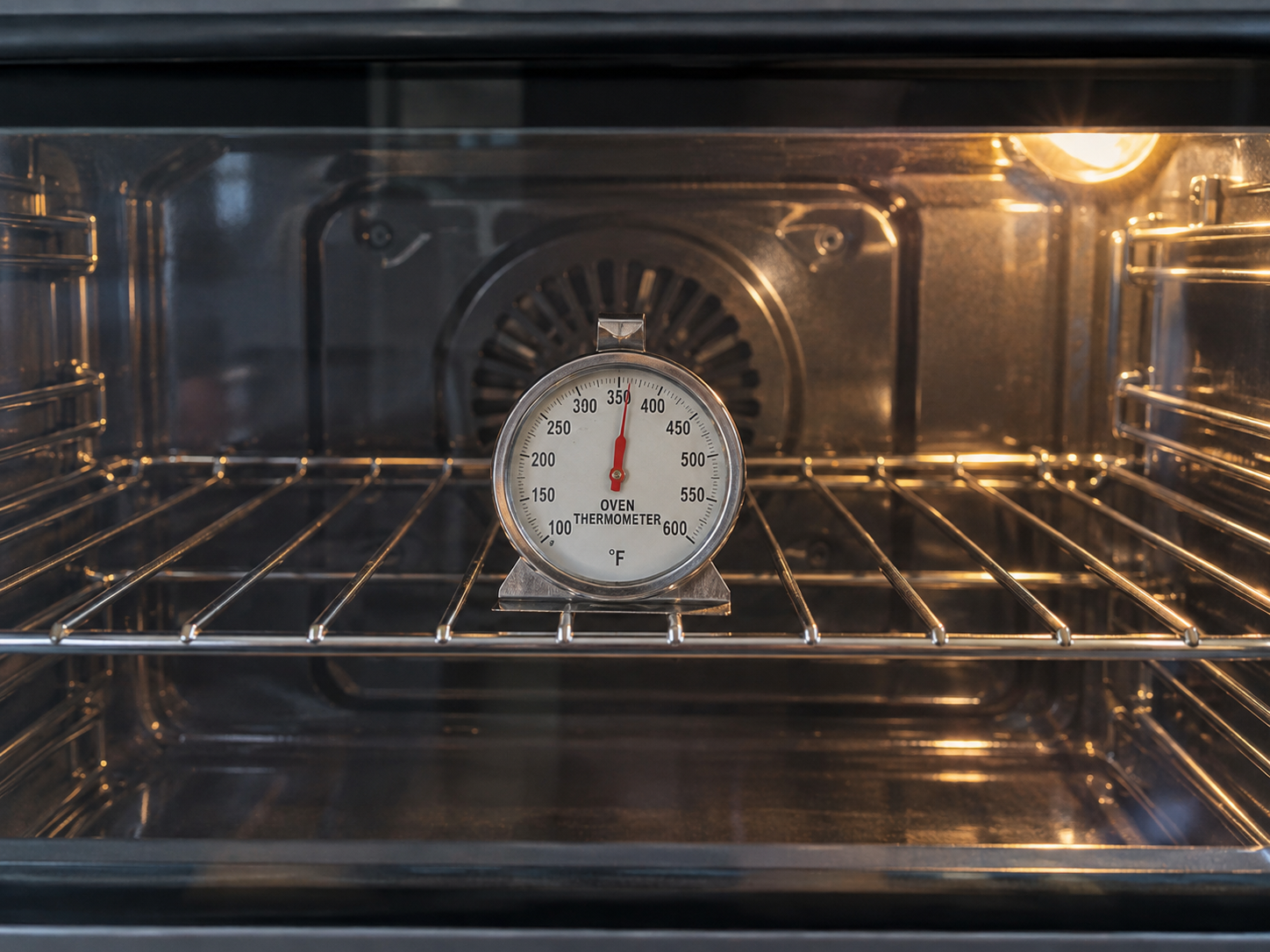
An oven not heating evenly usually has a failing bake element, a drifting temperature sensor, or a worn door seal letting heat escape. Test it with an oven thermometer at the centre rack before assuming the appliance is broken, because calibration drift and crowded pans explain a surprising share of uneven results.
What an Oven Not Heating Evenly Points To
An oven not heating evenly is a different complaint from an oven that will not heat at all, and it is worth separating them before you start. A dead oven points to an element, an igniter or a control failure. Uneven heat points to something subtler: a partial element failure, a sensor reporting the wrong temperature, heat escaping through a worn seal, or air not circulating the way the design assumes. The frustrating part is that the symptom shows up in your food rather than on the control panel, so people live with it for months, adjusting recipes around an appliance that is quietly drifting further out of specification. The good news is that one inexpensive test separates most of these causes from each other in about twenty minutes.
The Six Causes, Most Likely First
A Partially Failed Bake Element
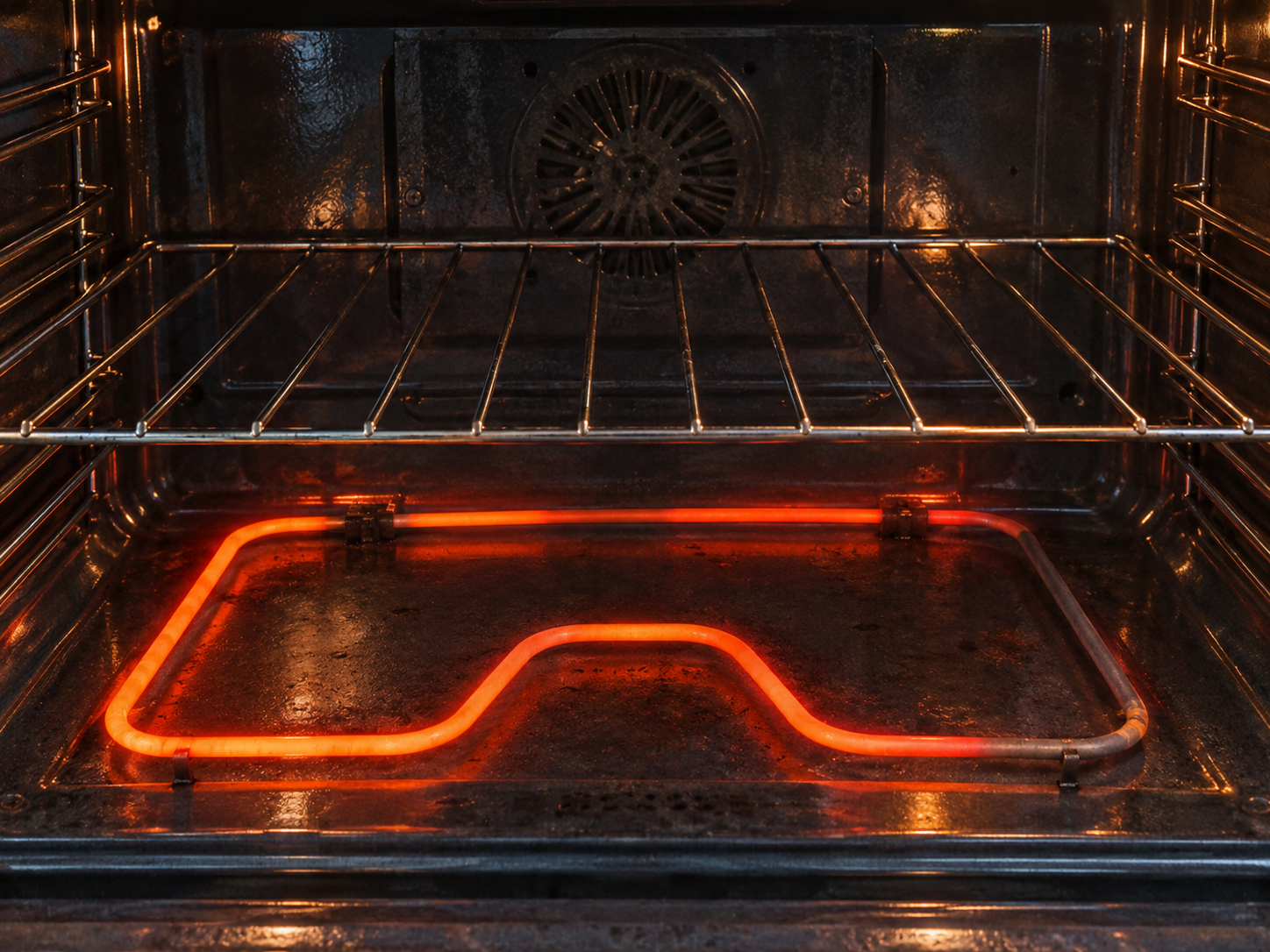
In an electric oven, the bake element at the bottom does most of the work. When it begins to fail, it often does so unevenly rather than all at once — a section stops radiating while the rest still glows, which produces exactly the one-side-browns pattern people describe. Look at the element while the oven preheats: it should glow a consistent orange along its entire length. Dark patches, blistering or visible separation mean the element is on its way out even if the oven still reaches temperature eventually.
A Drifting Temperature Sensor
The oven temperature sensor is a thin probe, usually at the upper rear of the cavity, that tells the control board how hot the box actually is. Sensors drift with age, and a sensor reading fifteen degrees high will hold the oven fifteen degrees cool forever without ever showing an error. This is the single most common reason a working oven bakes badly, and it is a comparatively straightforward part to replace once it has been confirmed with a meter.
A Weak or Failed Convection Fan
In a convection oven, the rear convection fan is what makes multi-rack baking work. A fan running slowly, or one whose motor has failed while the oven still heats, turns a convection oven into a worse-than-average conventional one, because the airflow the design depends on is gone. If your convection results changed but your bake results did not, the fan is the first suspect.
Door Seal and Hinge Wear
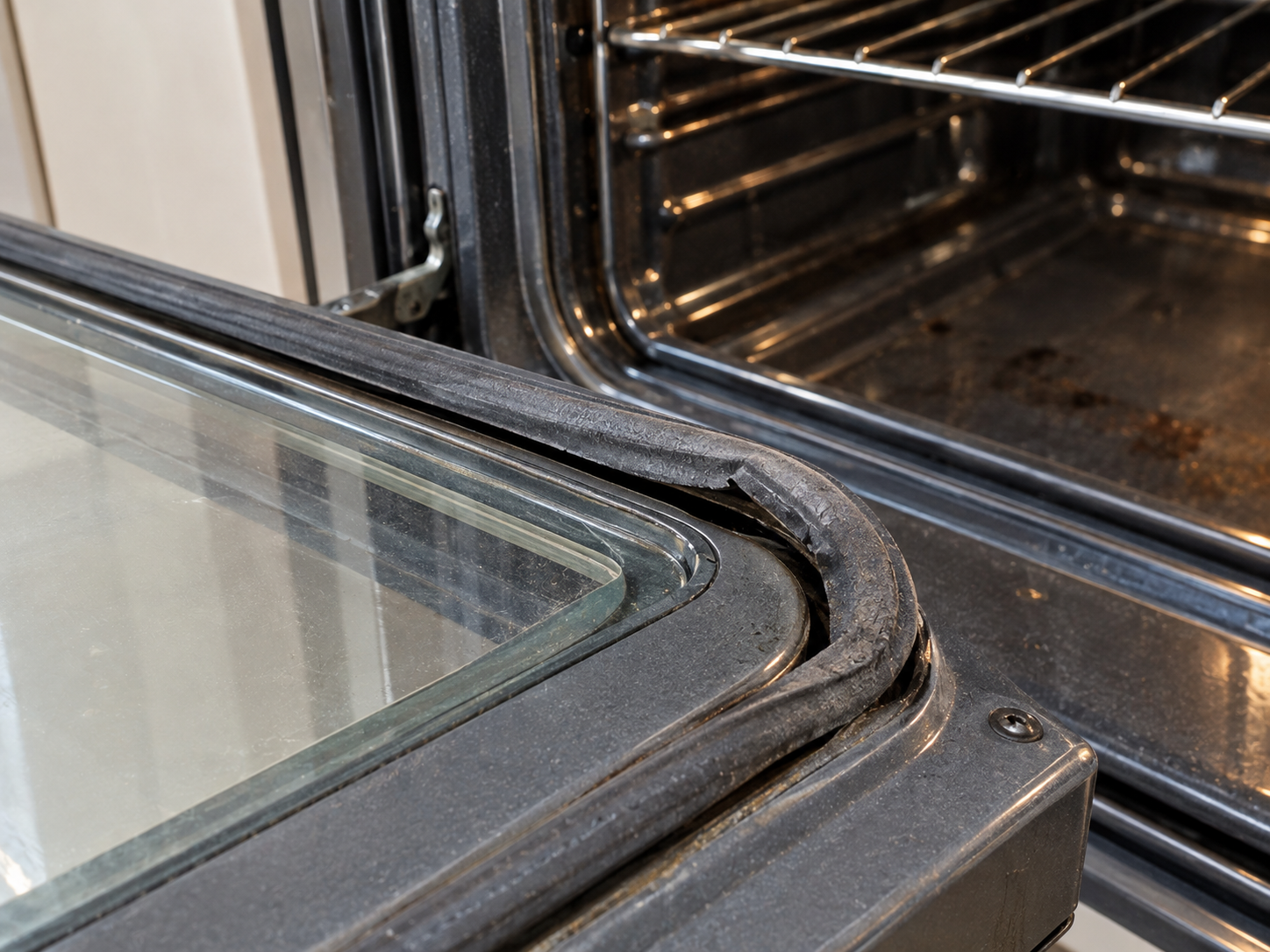
The gasket around the oven door and the hinges that hold the door square both wear. A door that no longer closes flush leaks heat continuously from one edge, which shows up as one persistently cooler zone inside. You can often feel it: run a hand around the closed door during preheat and look for escaping warmth, or check whether the door sits visibly lower on one side.
Calibration Drift
Most ovens allow a calibration offset, adjustable from the control panel, and most manuals explain how. Ovens drift over years of use, and an oven that is uniformly twenty degrees cool is a calibration issue rather than a fault. This matters because it is free to correct and requires no parts, but it only applies when the whole cavity is off by a consistent amount — not when one area is cool and another is hot.
Rack Position and Pan Crowding
Not every uneven bake is a fault. Dark metal pans absorb more heat than light ones, crowded sheets block the airflow the oven needs, and a pan placed hard against the back wall or a sidewall will scorch on that edge in a perfectly healthy oven. Before assuming a repair, try a single centred pan on the middle rack and see whether the problem persists.
How to Test Your Oven With a Thermometer
Buy a standalone oven thermometer and put it on the centre rack. Set the oven to 350 degrees, let it preheat fully, then wait another fifteen minutes so the cycling settles. Read the thermometer without opening the door for long. If it reads consistently low or high across the whole cavity, you are looking at calibration or a drifting sensor. If it reads correctly in the centre but food still browns unevenly, move the thermometer to each corner in turn across separate runs and map where the cold spot actually is. A cold zone at one side suggests an element or a door seal; a cold zone at the back suggests airflow. This test costs very little and turns a vague complaint into a specific one, which is exactly what makes a service call efficient rather than exploratory. It also matters for food safety, since roasting to safe internal temperatures assumes the oven is actually at the temperature it claims.
High-End Ranges in Scarsdale and Rye Kitchens
Kitchens in Scarsdale, Rye and Bronxville frequently run professional-style ranges and built-in wall ovens rather than mass-market units, and those appliances change the calculus in two ways. They are built to be serviced rather than replaced, with parts availability measured in decades rather than years, so a fifteen-year-old premium oven with a failed sensor is normally worth repairing without hesitation. They also run heavier elements and heavier doors, which means hinge and gasket wear shows up as uneven heating earlier than it would on a lighter appliance.
The practical advice is to avoid generic replacement parts on these units and to confirm that whoever works on them handles your brand specifically. Control boards and sensors are brand-matched, calibration procedures differ, and a professional range that has been repaired with an approximate part tends to come back with the same complaint a few months later.
What a Technician Checks That You Cannot
Everything above is visible or measurable from the front of the appliance. The next layer is not. A technician tests the oven sensor's resistance against the manufacturer's temperature chart, which is the only way to confirm a sensor is drifting rather than merely suspected of it — a sensor that reads plausibly at room temperature can still be badly wrong at 400 degrees. The bake and broil elements get continuity tested rather than judged by eye, because an element can fail electrically while still looking perfectly healthy, and can equally look scorched while still working correctly.
Beyond that, the relay board gets checked for the pitted contacts that cause an element to receive intermittent power, the door hinges are measured for square rather than eyeballed, and on convection models the fan motor is tested under load instead of simply confirmed to spin. None of this requires exotic equipment, but all of it requires the panel off and a meter in hand, and doing it in one visit is what separates a diagnosis from a sequence of guesses. It is also why the thermometer test above is worth running first: arriving with "the centre reads thirty degrees low and the left rear is cooler still" turns an open-ended visit into a targeted one.
When Uneven Heat Becomes a Safety Issue
Most uneven baking is an annoyance. A few symptoms are not. If you smell gas at any point, stop, leave the door closed, ventilate and call the gas utility before anyone else. If an electric element arcs, sparks or shows a bright white spot, switch the oven off at the breaker rather than at the control panel, because a shorting element can continue to draw current. Visible flame outside the burner area on a gas range, a door that will not latch during a self-clean cycle, or a control panel that ignores input all warrant stopping immediately.
Short of those, uneven heating is a repair rather than an emergency — but it is one worth handling before a holiday rather than during one. If the thermometer test points at a sensor, element or seal, have the oven diagnosed properly so the correct part goes in the first time rather than the third.
- oven
- bake element
- temperature sensor
- calibration
- scarsdale