Local Guides
Samsung Fridge Warm, Freezer Cold: A Failed Defrost Heater in Englewood
By Michael Smith — Head Technician · October 12, 2026 · 7 min read
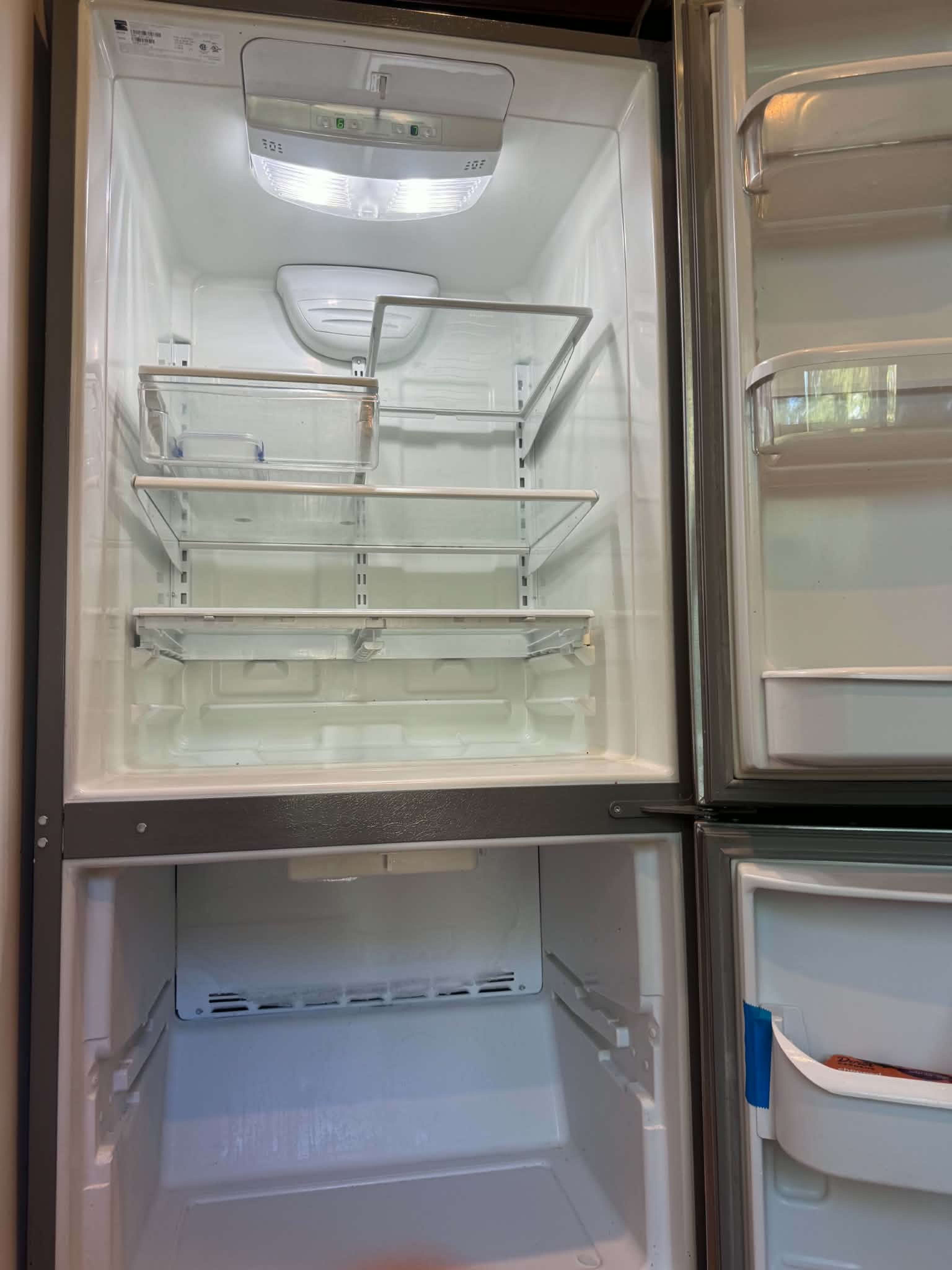
When a Samsung refrigerator is warm but the freezer is still cold, a failed defrost heater is a common cause. Without it, frost builds on the evaporator coil until it blocks the airflow. Replacing the heater and clearing the ice restores cooling; a manual defrost only buys a week or two.
This September 2025 repair in Englewood is one of the most common refrigerator calls there is: a Samsung refrigerator warming up while the freezer still felt cold. The cause was a failed Samsung defrost heater. Without it, frost had built up on the cooling coil until it was a solid block of ice and cold air could no longer get through. Here is what we found, what we replaced, and how to tell if your refrigerator has the same problem.
Same symptoms at home? Call or text (800) 631-0109, 24/7, or book online.
Where: Englewood, Bergen County
When: September 2025
Appliance: Samsung refrigerator
Problem: fresh-food section warm, freezer still cold
Cause: failed defrost heater; the evaporator coil had iced over
Fix: replaced the defrost heater, cleared the ice, tested a full defrost
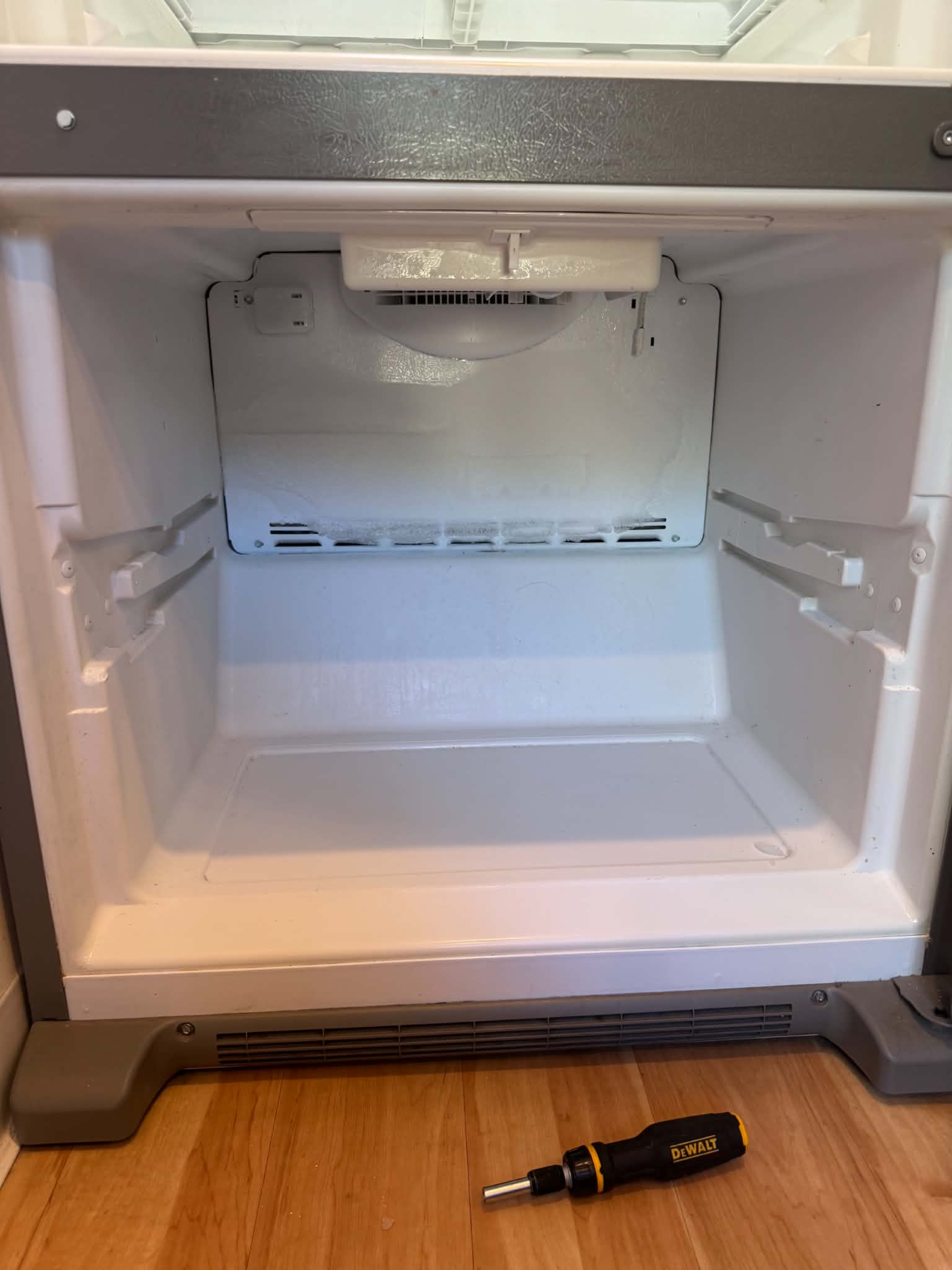
What the refrigerator was doing
This failure has a recognisable pattern, and this refrigerator followed it. The fresh-food section had crept up from cold to cool to warm over several days, while the freezer still felt cold to the hand. A failed defrost heater often comes with a fan noise as well: a scraping or buzzing from behind the back panel, which is the fan blade touching ice that has built up around it.
That combination, a warm fridge with a cold freezer, sends many people straight to the conclusion that the compressor is dying. It almost never is. A compressor that fails takes the whole refrigerator down, freezer included. When only part of it warms up, the problem is usually the air, not the refrigerant.
What we found behind the panel
Every frost-free refrigerator has an evaporator: the coil that gets cold and that the fans blow air across. Moisture from the air freezes onto that coil all the time, so several times a day the refrigerator switches the cooling off and turns on a small defrost heater to melt it. The water runs down a drain to a pan underneath, where it evaporates.
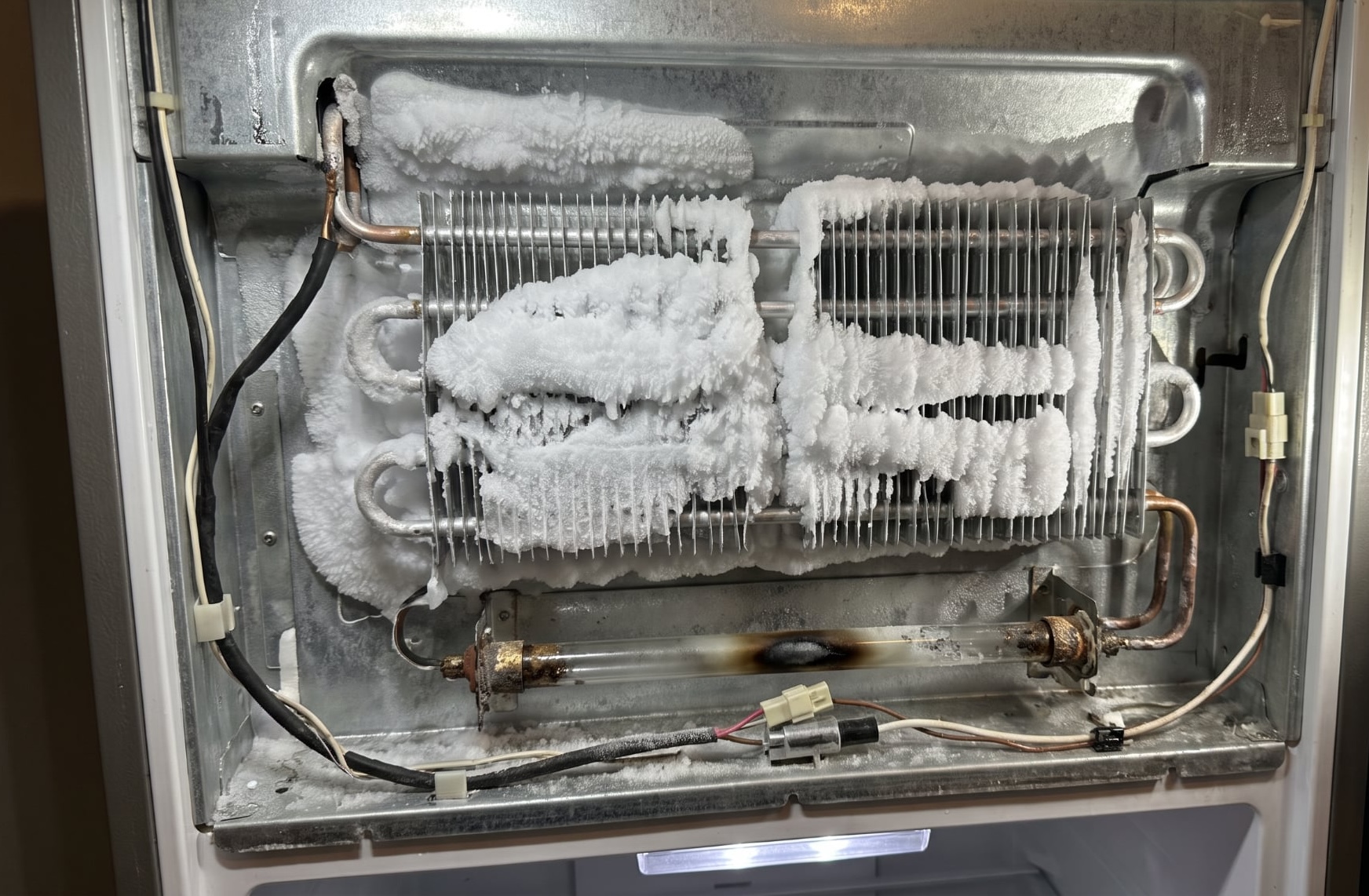
With the evaporator cover removed, the coil was encased in ice. That's what happens when the defrost cycle stops working: the frost builds up cycle after cycle until it blocks the airflow completely. A Samsung defrost system has three main parts that can cause this, so we tested each one rather than guessing:
The defrost heater, which should show a specific resistance on a meter. This one read open: the heating element had burned through, so no current could flow and no heat was produced.
The defrost sensor, which tells the control board when the coil is clear. It tested within range.
The control board, which starts the defrost cycle. With a good sensor and an open heater, there was no reason to suspect it.
The fix
We replaced the defrost heater with the correct part for the model. Before refitting the cover, we melted the remaining ice off the coil and made sure the defrost drain was clear, because a drain blocked by ice causes its own leaks and refreezing later. Then we ran a defrost test to confirm the new heater warmed the coil and switched off as it should.
After a repair like this, the refrigerator needs a few hours to pull the fresh-food section back down to temperature, and up to a day to settle completely. Food that had been kept cold in the freezer or in a cooler could go straight back in.
Why a Samsung defrost heater fails
A defrost heater switches on and off several times a day for years. Like any heating element, it eventually burns through, and age is the most common reason. Two other things shorten its life:
Extra moisture. A door that doesn't seal properly, or one left ajar, lets humid kitchen air in. More humidity means more frost, longer defrost cycles and more strain on the heater.
Repeated manual defrosting. When the refrigerator is defrosted by hand again and again instead of being repaired, ice and water get into places they shouldn't, including the drain and the wiring around the heater.
How to tell if your refrigerator has the same problem
You can check most of this without tools:
Compare the two sections. If the freezer is still cold but the fresh-food side is warm, the defrost system moves to the top of the list.
Listen. A scraping, ticking or buzzing fan behind the back panel often means the blade is hitting ice.
Look for frost. Frost or ice building up on the back wall of the freezer, or behind the vents, is a classic sign.
Watch what a manual defrost does. If you empty the refrigerator, unplug it for a day with the doors open and it then works for a week or two before warming up again, the defrost system has failed. The manual defrost melted the ice; nothing is melting the new frost.
If the whole refrigerator is warm, freezer included, or it's completely silent, the problem is different: the condenser fan, the compressor's start parts or the control board. Our refrigerator repair page covers those.
Problems that look like a failed defrost heater
Several faults produce a warm fridge with a cold freezer, and each needs a different part. That's why the meter test matters more than the symptom:
A failed evaporator fan. The coil gets cold but no air moves across it. There's no fan sound behind the panel, and often no heavy ice either.
A failed defrost sensor or control. The ice looks exactly the same, because the heater is never told to switch on. The heater tests fine and the sensor or board doesn't.
A frozen air duct or damper. On models that feed cold air from the freezer into the fridge, ice in the duct blocks the airflow while the freezer stays cold.
A door that doesn't seal. Frost forms on food and on the walls near the door rather than behind the panel, and the gasket feels loose or torn.
Ice in the ice maker compartment. On French-door models with the ice maker in the door, ice builds up in that compartment and jams it. That's a different repair, covered on our Samsung page.
What to have ready when you call
The model number speeds everything up, because it tells us which defrost parts the refrigerator uses. On most Samsung refrigerators it's on a label inside the fresh-food section, on a side wall near the top or bottom. It also helps to say when the warming started, whether you hear a fan noise, and whether you've already defrosted it by hand.
Is a failed Samsung defrost heater worth repairing?
In almost every case, yes. The sealed system, the expensive part of a refrigerator, was untouched here. A defrost heater is a modest part, and replacing it restores the refrigerator to normal. The calculation only changes on an old refrigerator that also has a failing compressor or a cracked liner. Our Samsung repair page lists the other common Samsung faults, from ice maker freeze-ups to washer drain errors.
How to keep it from coming back
Check the door gaskets twice a year. Close a sheet of paper in the door; if it slides out with no resistance, the seal isn't doing its job.
Don't block the vents inside the fresh-food section or the freezer with food.
Keep the doors closed while you unload groceries, rather than open the whole time.
If frost starts building up again, get it checked early, before the ice reaches the fan.
Refrigerator repair in Englewood and nearby
We repair refrigerators, freezers and ice makers in Englewood and across Bergen County, Samsung and the other major brands. See our Englewood page for the area we cover there, or our refrigerator troubleshooting page for other symptoms. Samsung also publishes manuals and support information for its refrigerators on its US support site.
- defrost heater
- fridge not cooling
- Englewood
- samsung refrigerator