Symptom Guides
Clifton Emergency Washer Repair: How to Stop a Leak Fast
By Michael Smith — Head Technician · October 6, 2026 · 7 min read
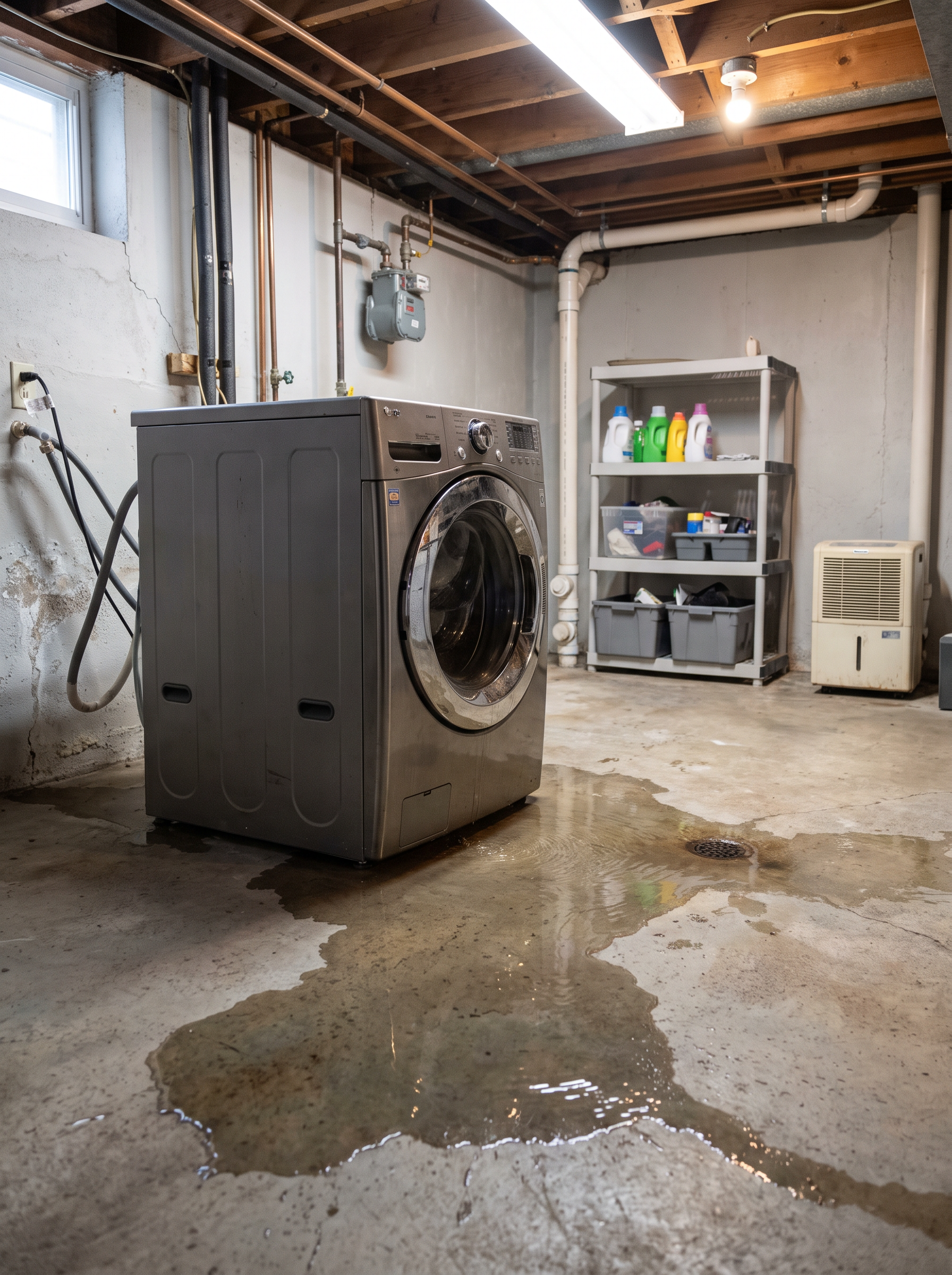
For Clifton emergency washer repair, stop the water first: close the hot and cold supply valves behind the washer, or the main shutoff if they stick. Cut power at the breaker if water is near outlets. Then look for the source: inlet hoses, the drain standpipe, the door boot, the pump or a washer that keeps filling.
Few household problems move as fast as a leaking washing machine. A split fill hose can release water at full household pressure, and a basement laundry area can go from a small puddle to standing water in the time it takes to find a towel. If you're dealing with it right now, this Clifton emergency washer repair guide gives you the steps in order: stop the water, make it safe, find the source, and decide whether you need a technician tonight. It's written for homes in Clifton, Paterson, Passaic, Hawthorne, Totowa, Little Falls and across Passaic County.
Water still coming out? Shut the valves first, then call (800) 631-0109. Active washer leaks in Clifton and across Passaic County are dispatched 24/7.
Step 1: Stop the Water
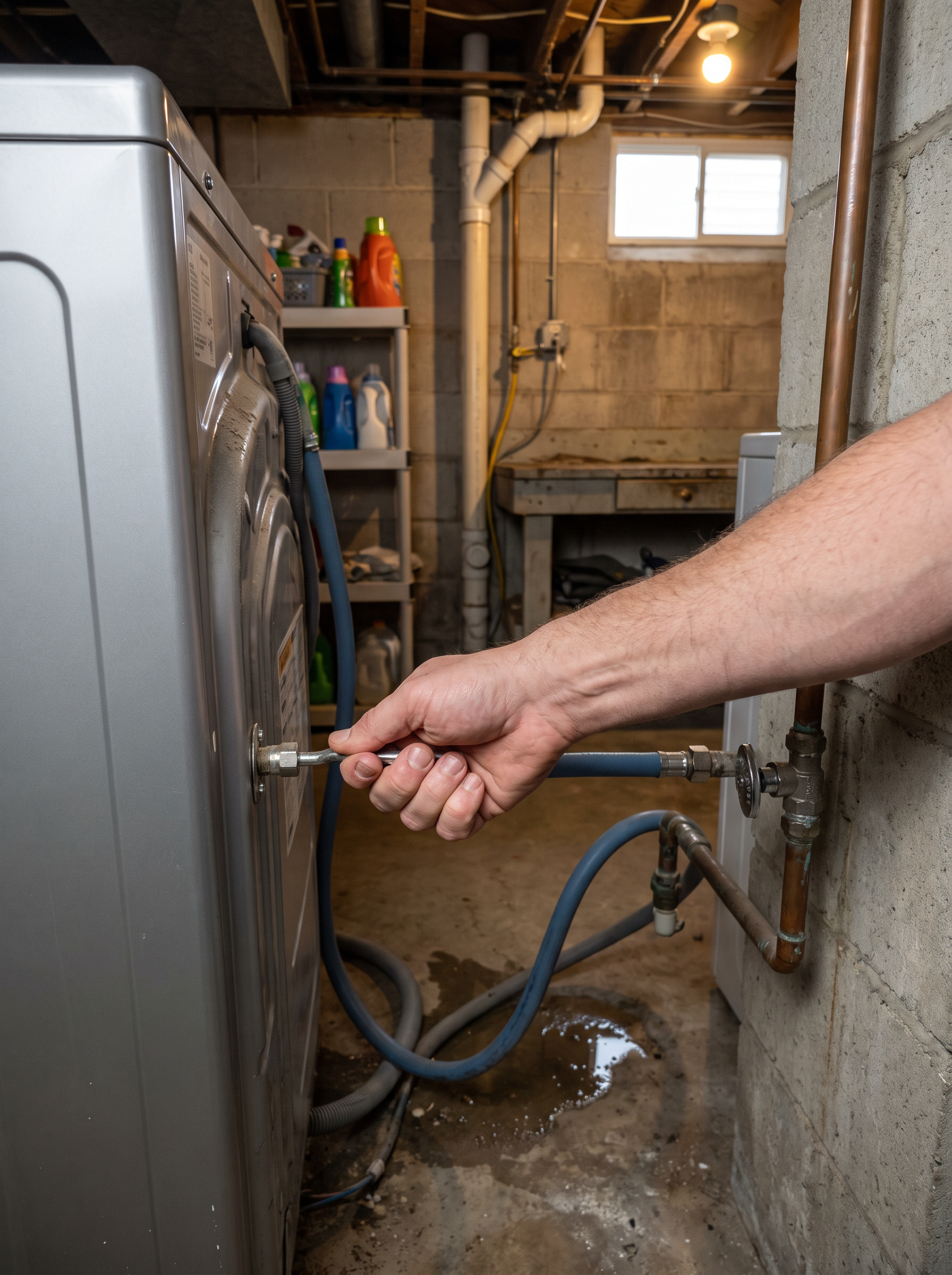
Behind almost every washer are two supply valves, one for hot and one for cold. Turn both off. Lever-style quarter-turn valves are off when the handle sits crosswise to the pipe. Older round-handle valves turn clockwise to close, and in older homes they may be stiff from years without use.
If the valves won't budge, don't force them; an old valve can snap. Go to the main water shutoff instead. In most Passaic County homes it's in the basement where the water line enters, usually near the meter on the front wall. Everyone in the house should know where it is before they ever need it.
Step 2: Make It Safe
Water and electricity are the real danger here. If the floor around the washer is wet, or water is anywhere near outlets or the washer's cord, don't reach in to unplug it. Switch off the washer's circuit at the breaker panel while standing somewhere dry. Ready.gov's flood guidance puts it plainly: do not touch electrical equipment if it is wet or if you are standing in water.
Once the power is off, start removing water with towels, a mop or a wet-vac. Move anything stored on the floor nearby. If your laundry is on an upper floor, check the ceiling below for staining or dripping.
Step 3: Find Where the Water Is Coming From
Where the water appears, and when, points to the cause.
Burst or leaking inlet hoses
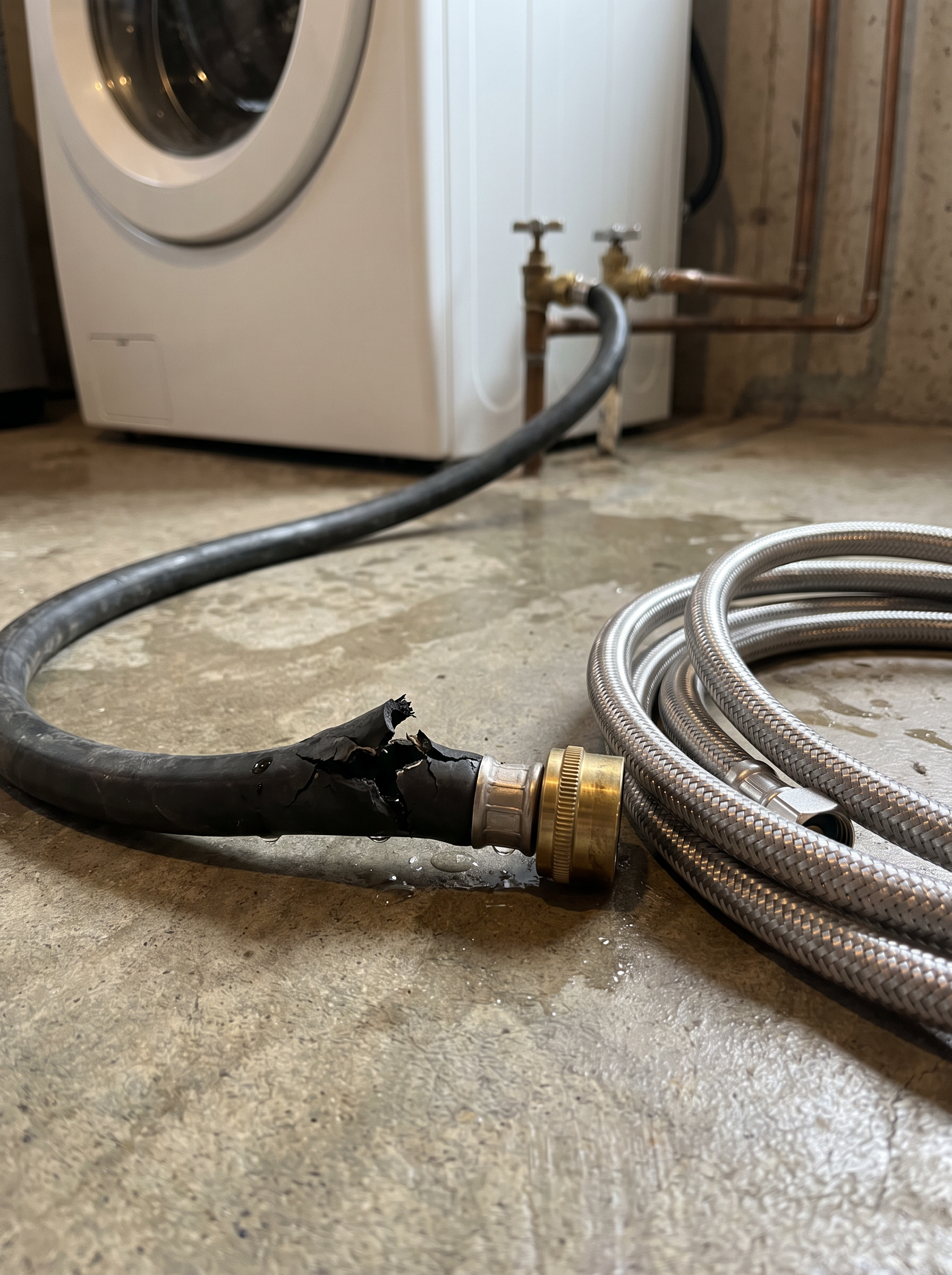
If water sprayed or poured from behind the machine, look at the fill hoses. A washer inlet hose burst is one of the most destructive household leaks because the hose stays pressurized even when the washer isn't running. Rubber hoses harden, bulge and crack with age; replace original rubber hoses with braided stainless steel ones, and check them every year.
Overflow at the drain standpipe
If water came out of the wall pipe the drain hose empties into, and only while the washer was draining, the standpipe or the drain line beyond it is partly clogged, or it's too short to handle the washer's pump. A drain hose pushed too far down the standpipe can also cause siphoning. Laundry-sink drains clog with lint the same way.
A washer door seal leak
On a front-loader, water at the bottom front of the door usually means a torn door boot, often cut by a coin, underwire or zipper, or a seal fouled with residue. A small tear can release a surprising amount of water during each cycle.
Leaks from underneath
Water under the machine during drain points toward the drain pump, the pump filter cap not being fully tightened, or an internal hose. A slow leak at the back with rust streaks and a roaring spin suggests a failing tub seal and bearings.
Suds everywhere
Foam coming out of the detergent drawer or door means too much detergent, or non-HE detergent in an HE machine. Run a rinse cycle with no detergent to clear it, and cut the dose.
A washer that keeps filling
If water keeps flowing into the tub even with the washer switched off, the water inlet valve is stuck open. This is the most urgent version of a washing machine leaking: close the supply valves and keep them closed until the valve is replaced.
Top-Loader vs. Front-Loader Leaks
The type of washer changes where you look. Front-loaders hold water behind the door, so the door boot, the drain pump filter at the bottom front and the dispenser drawer are the usual suspects. Top-loaders rarely leak at the lid; when they leak, it's more often from the inlet hoses, the drain hose connection, a failed tub seal under the agitator or basket, or an overfill caused by a faulty water-level sensor or inlet valve. If a top-loader leaks only during heavy loads, try a smaller load with the right water level before assuming a part has failed. In either type, a leak that starts only after a move or a new installation usually means a loose hose connection, a missing hose washer or a drain hose that slipped out of the standpipe.
Clifton and Passaic County Basements
Many older homes in Clifton, Paterson and Passaic keep the laundry in the basement, beside a floor drain, a laundry sink and supply valves that may be decades old. That arrangement makes leaks easy to miss; a slow drip can run for days before anyone notices. It also means basement laundry is exposed when storms flood the area. When the remnants of Ida swept through in September 2021, flooding along the Passaic River and its tributaries put water into basements across Paterson, Little Falls, Totowa and neighboring towns.
If your washer has been sitting in floodwater, don't run it. Water can reach the motor, control board, pump and wiring. Leave it unplugged and have it inspected before you use it again.
While You Wait for a Technician
Photograph the water, the machine and any damage before cleanup, for your insurance records.
Keep the supply valves off and the breaker off.
Remove wet laundry from the drum and set it aside.
Run fans and a dehumidifier to dry the area; basements hold moisture.
Note what the washer was doing when the leak started: filling, washing, draining or spinning. It speeds the diagnosis.
When a Leak Needs Clifton Emergency Washer Repair
Call our 24/7 emergency line when water keeps flowing after the machine is stopped, when it's reaching finished floors, walls or a ceiling below, when the washer fills on its own, or when there's any electrical burning smell. An active water leak from a washer is one of the situations we dispatch ahead of the standard schedule. Emergency and after-hours visits carry a premium over a standard appointment, and a coordinator quotes it on the phone before dispatching so there are no surprises.
If the water is stopped and the area is safe, a standard appointment is usually fine. Our washer repair service page explains what to expect, and our guide to a washer that won't drain helps if water is left in the drum.
Preventing the Next Leak
Replace rubber inlet hoses with braided stainless steel hoses.
Turn the supply valves off and on once or twice a year so they don't seize.
Put a battery-powered water-leak sensor on the floor beside the washer.
Use a drain pan under upstairs laundry.
Check the door boot for tears and trapped objects every few weeks.
Use HE detergent, measured to the line.
Small leaks add up even when they're not emergencies. The EPA's WaterSense program estimates that the average household's leaks can waste more than 9,300 gallons of water a year.
Emergency Washing Machine Repair NJ Homeowners Can Count On
SOS Appliance Repair provides emergency washing machine repair NJ homeowners can reach 24 hours a day, covering Clifton, Paterson, Passaic, Hawthorne, Totowa and Little Falls, plus Bergen and Morris counties in New Jersey, Westchester and Rockland counties in New York, and Fairfield County in Connecticut. You get a written estimate before any work starts and a 12-month parts-and-labor warranty. Browse symptoms on our washer page, call (800) 631-0109 now if water is still flowing, or book online once the leak is under control.
For coverage, arrival windows and local notes, see our pages on appliance repair in Clifton and appliance repair in Paterson.
- washing machine leaking
- washer inlet hose burst
- emergency washing machine repair NJ
- washer door seal leak