Symptom Guides
Ice Maker Not Making Ice? 6 Fixes
By Michael Smith — Head Technician · September 21, 2026 · 7 min read
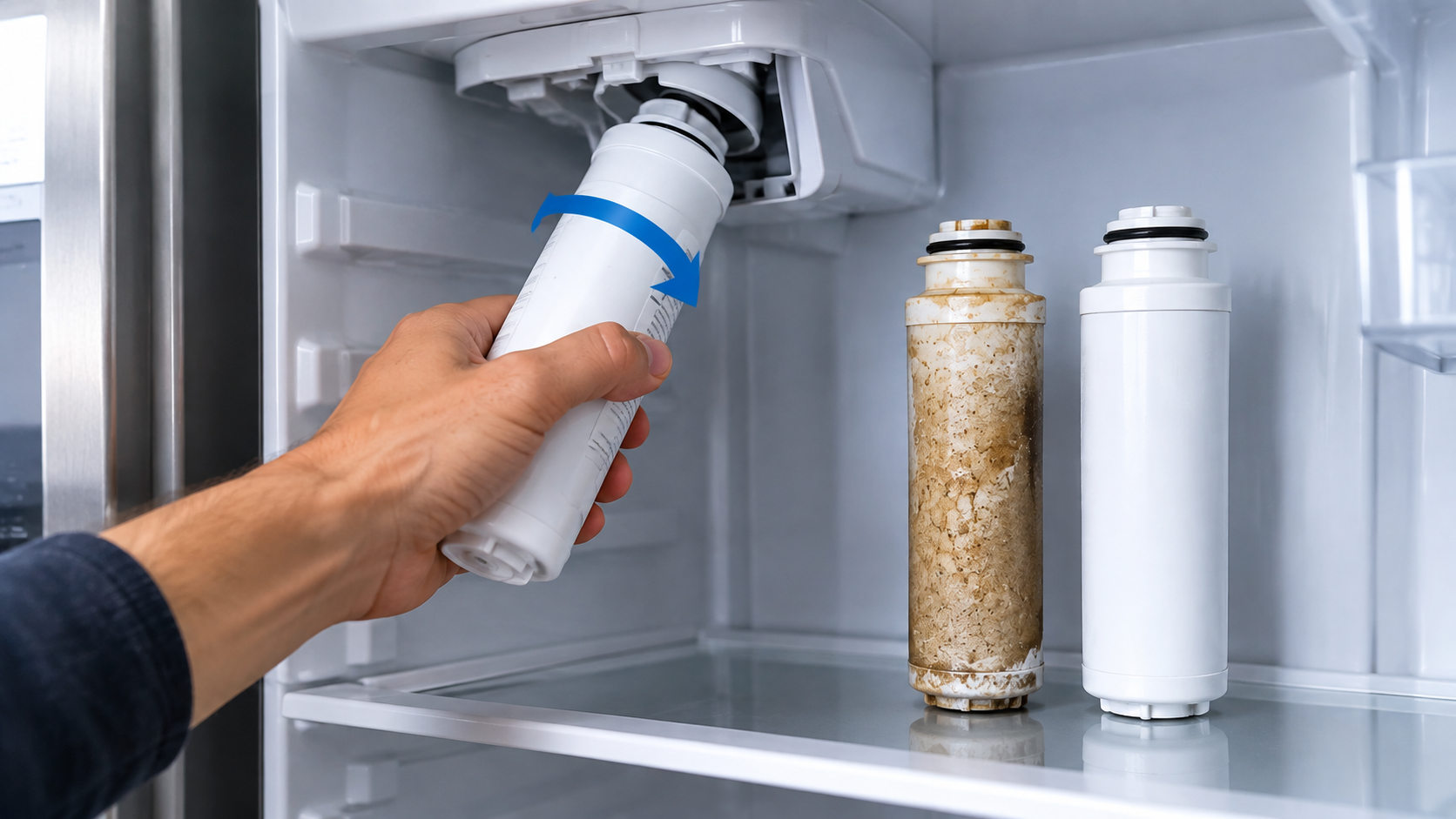
An ice maker not making ice is usually a water supply problem rather than a failed part. A frozen fill tube, an overdue water filter, a closed supply valve or a freezer running above ten degrees account for most cases. Check the filter date and freezer temperature before assuming the ice maker itself has failed.
Why an Ice Maker Not Making Ice Is Usually a Water Problem
An ice maker is a simple machine with a demanding supply chain. It needs water at adequate pressure, a freezer cold enough to freeze a measured fill within a set cycle time, and a working harvest mechanism to drop the cubes into the bin. When an ice maker not making ice arrives as a complaint, the failure is far more often in the first two requirements than in the third. That is good news, because water supply and freezer temperature are both things you can check in a few minutes without opening anything. It also explains why replacing the ice maker assembly — the expensive instinct — so often fails to fix the problem: a new assembly fed by a blocked filter or sitting in a freezer at eighteen degrees behaves exactly like the old one did.
The Six Causes, in the Order Worth Checking
A Frozen Fill Tube
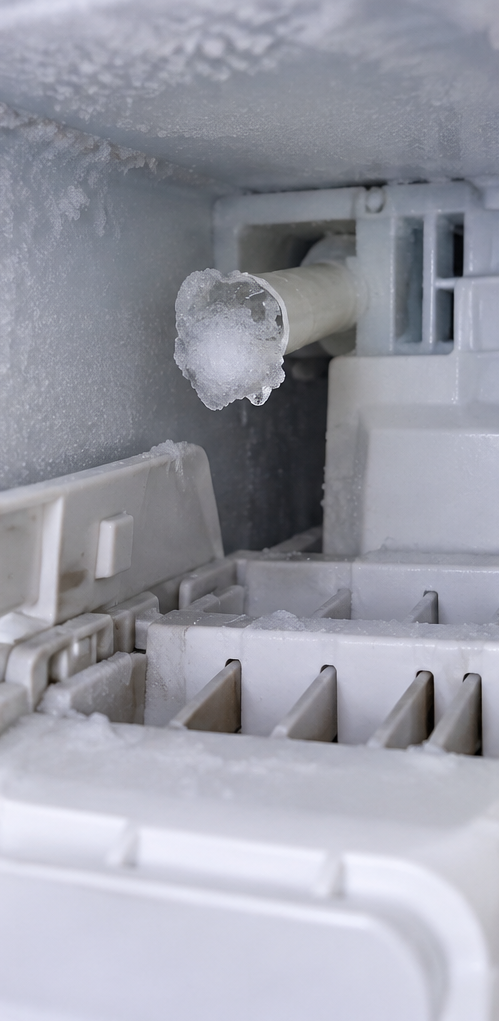
The small tube that delivers water into the ice mould can freeze solid, usually after a partial fill left water sitting in it. Once it is blocked, every subsequent cycle delivers nothing and the ice maker keeps cycling on an empty mould. You can often see a plug of ice at the tube opening at the back of the ice maker. Clearing it with warm water on a cloth, rather than anything sharp, resolves the immediate problem, but it is worth asking why the fill was partial in the first place, because the answer is normally low pressure from one of the next two causes.
A Clogged or Overdue Water Filter
Refrigerator water filters have a service life of roughly six months, and a filter well past that restricts flow enough to starve the ice maker while still producing acceptable drinking water from the dispenser. This is the single most common cause in households that have never changed the filter, and the symptom often develops gradually: smaller cubes, then hollow ones, then nothing. If you cannot remember the last change, change it before investigating anything else.
A Closed or Kinked Supply Line
The quarter-turn valve behind the refrigerator or under the sink gets closed during unrelated plumbing work and not always reopened. The copper or plastic line behind the unit kinks when a refrigerator is pushed back into place after cleaning. Both produce a complete stop rather than a gradual decline, and both correlate with a recent event — a plumber's visit, a floor replacement, a kitchen deep clean.
The Water Inlet Valve
This electrically operated valve opens to admit water on each cycle. It can fail electrically, or it can silt up and open only partially, which produces undersized cubes rather than none at all. Low household water pressure has the same effect, so a valve should not be condemned until supply pressure has been ruled out, particularly in a home with a well or a pressure-reducing valve.
A Freezer Running Above Ten Degrees
Ice makers are designed to harvest on a timed cycle, and that timing assumes a freezer at roughly zero degrees. A freezer sitting at fifteen or twenty degrees still keeps food frozen, so nothing seems wrong, but the mould may not reach harvest temperature within the cycle window and production slows or stops. Put a thermometer in the freezer before blaming the ice maker, because this one is invisible otherwise.
The Module, Bail Arm or Optical Sensor
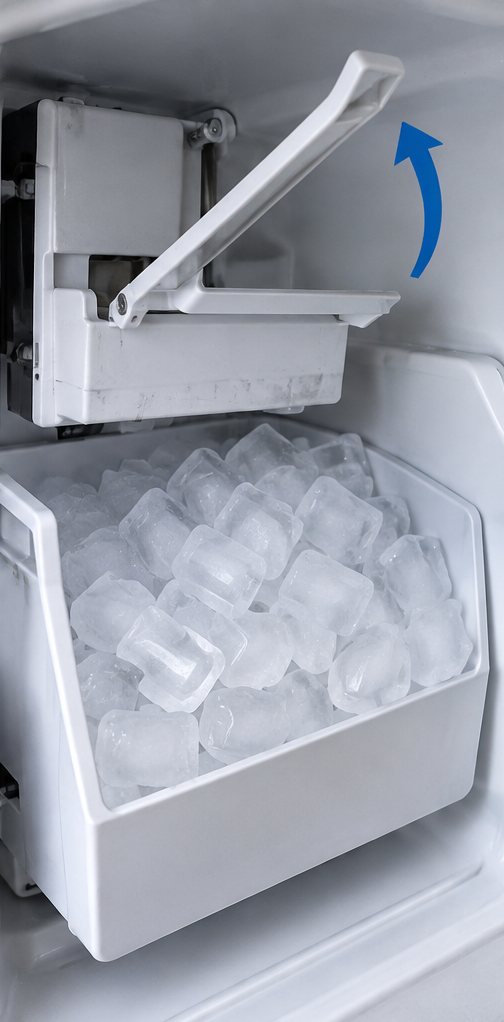
Finally, the ice maker itself. The wire bail arm that senses a full bin can be knocked into the off position by a bag of frozen food, which stops production instantly and confuses everyone. Models using an optical sensor instead can be fooled by frost on the emitter. Beyond those, the module's motor and thermostat can genuinely fail — but they are last on this list for good reason.
The 24-Hour Rule People Skip
After any change — a new filter, a reopened valve, a thawed fill tube, a temperature adjustment — a refrigerator ice maker needs up to twenty-four hours to return to full production, and the first batch or two may be small or cloudy. People routinely make a correct fix, see no ice two hours later, conclude it failed, and move on to replacing parts that were never faulty. Discard the first two batches, which also clears any carbon fines from a newly installed filter, and judge the result the following day. The same rule applies after a power outage or after the refrigerator has been moved: give it a full cycle of hours before deciding anything is wrong.
Water Quality, Filters and Bergen County Supply
Households across Paramus, Hackensack and Teaneck are served by public water systems, which means your water utility publishes an annual Consumer Confidence Report describing exactly what is in the supply. That matters for ice because mineral content affects both taste and the rate at which a fill valve and filter silt up. If your ice tastes flat or cloudy even with a fresh filter, the answer usually lies in the supply rather than the appliance, and a filter certified to NSF standards for the specific contaminants you care about is a more useful purchase than a generic replacement.
There is a practical maintenance point here too. Harder water shortens effective filter life, so a six-month interval printed on the box may be optimistic in some homes and generous in others. If your cubes start shrinking four months after a change, shorten your interval rather than assuming the ice maker is failing. Filters are inexpensive; inlet valves and ice maker modules are not.
New Refrigerators in High-Rise Kitchens
In the apartment buildings along the Hudson in Fort Lee, Cliffside Park and Edgewater, a surprising number of ice maker complaints turn out to be installation issues rather than faults. Not every kitchen was plumbed with a refrigerator water line, so ice makers sometimes sit connected to nothing at all in a brand-new unit, or run on a long saddle-valve tap that never provided adequate pressure. If a refrigerator has never made ice since the day it arrived, the question is not what broke — it is whether the water connection was ever completed properly.
Building rules matter here as well. Work involving a water connection often requires a licensed plumber and building notification, and some buildings require shutting a riser to make the connection at all. Check what your building requires before scheduling, because an appliance technician cannot always complete a plumbing tie-in on the spot.
When to Call
Call when the supply side has been eliminated and the machine still will not produce. Specifically: the filter is new, the shut-off valve is open, the line is unkinked, the fill tube is clear, the freezer holds near zero degrees, the bail arm is down, and twenty-four hours have passed. At that point the remaining candidates are the inlet valve, the ice maker module, the thermostat inside it, or the wiring between them — all of which need electrical testing rather than inspection. It is worth writing down what you have already eliminated, because the order above is exactly the order a technician would otherwise repeat on arrival, and skipping it turns an hour-long visit into a much shorter one.
A technician can test whether the valve is receiving voltage and whether it actually opens when it does, which separates a failed valve from a failed control in a single measurement. If your refrigerator is otherwise healthy, this is normally a contained repair, and it is worth having the refrigerator looked at rather than living with a dispenser that works and an ice bin that stays empty.
- ice maker
- water filter
- fill valve
- refrigerator
- bergen county