Symptom Guides
Yonkers Dryer Repair: Why Your Clothes Still Come Out Damp
By Michael Smith — Head Technician · September 27, 2026 · 7 min read
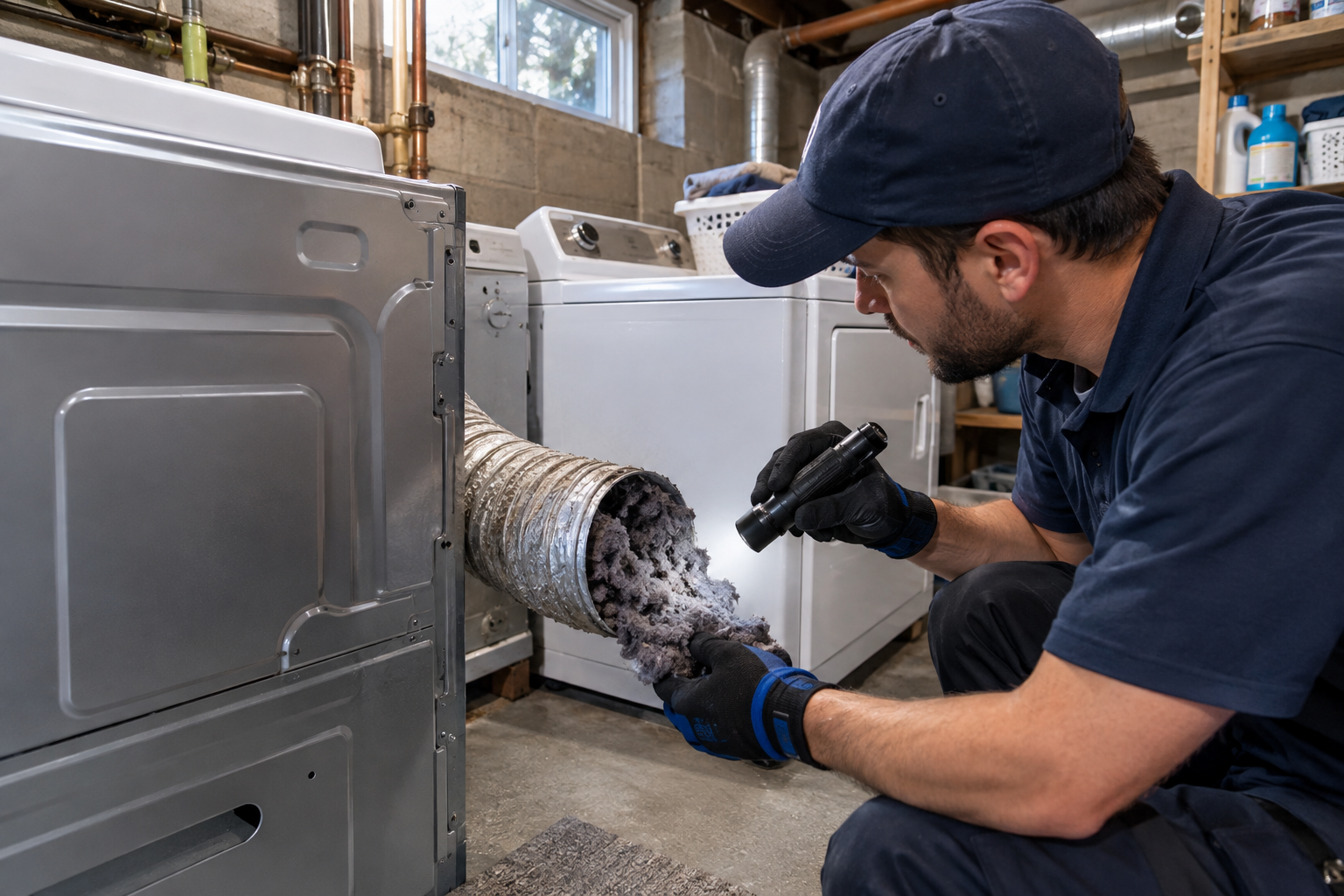
Yonkers dryer repair calls for slow drying trace back to restricted airflow: a clogged vent run, a crushed transition duct or a blocked exterior hood. Check the lint screen, the duct behind the dryer and the outside flap while the dryer runs. If it still runs hot and slow, a technician should test the thermal fuse and heating circuit.
If your dryer needs two or three cycles to finish a load of towels, you are not alone, and the heater is rarely the first thing to blame. Most Yonkers dryer repair calls for slow drying come down to airflow: the dryer is heating, but the hot, wet air has nowhere to go. That matters for more than your time and your electric bill. A dryer that can't exhaust properly runs hotter than it was designed to, and in Yonkers, Mount Vernon and the older multi-family blocks of Westchester, long and aging vent runs make this problem especially common.
Dryer running hot or shutting itself off? Stop using it and call (800) 631-0109. Same-day dryer repair in Yonkers is available when you book before 2 PM.
This guide explains how to tell a vent problem from a mechanical one, what you can check yourself in about fifteen minutes, and when to bring in a technician.
Start With Airflow: Most Slow Dryers Can't Breathe
A dryer works by pulling room air across a heat source, tumbling it through the clothes and pushing the moisture-laden air out through the vent. Restrict any part of that path and the moisture stays in the drum. The dryer keeps heating, the clothes stay damp, and the cycle ends with a load that is hot but not dry.
The usual culprits are simple:
A lint screen coated with residue. Dryer sheets and fabric softener leave a waxy film you can't see. Run water over the clean screen; if the water beads up and pools instead of passing through, wash it with warm soapy water and a soft brush.
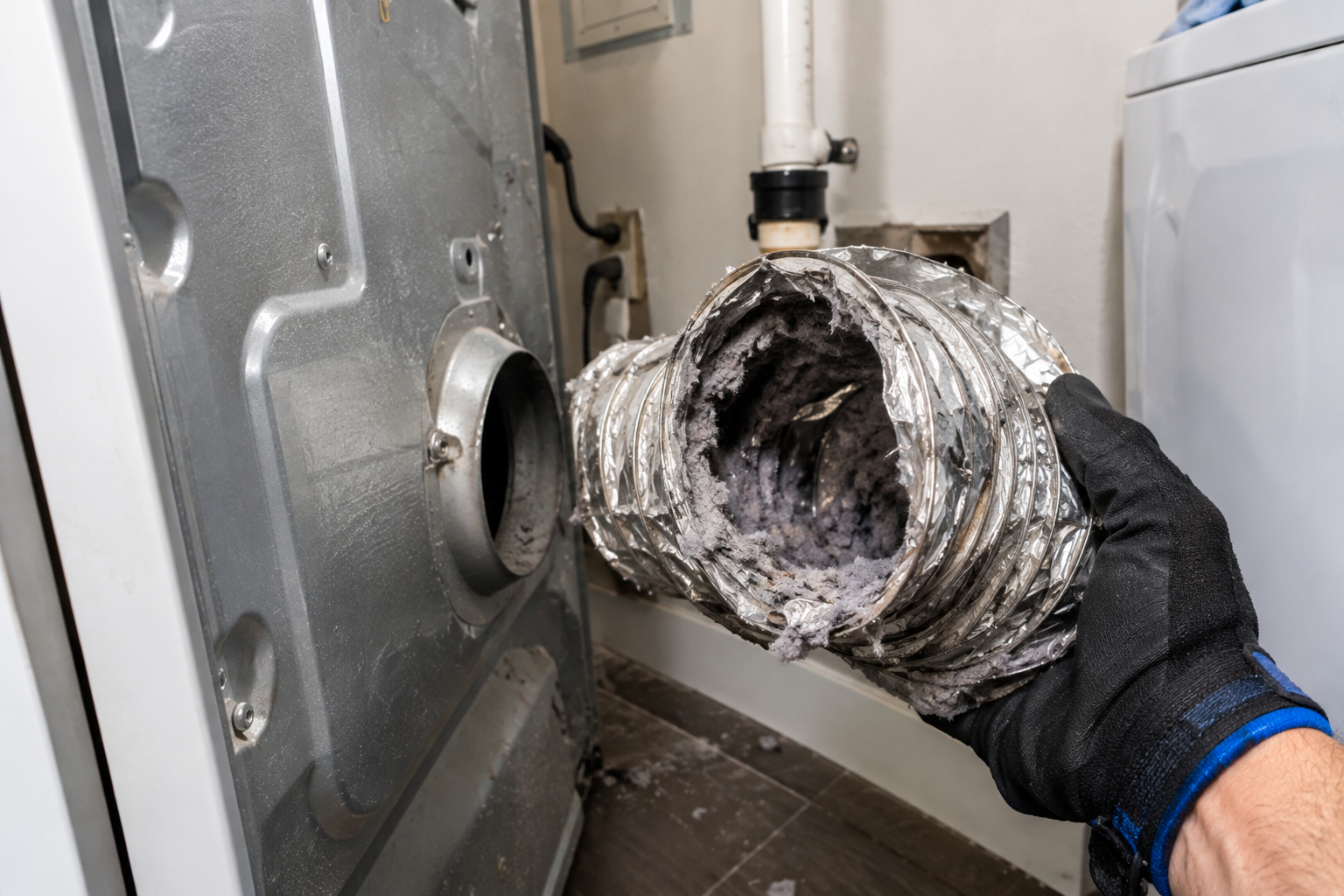
A crushed transition duct. The short, flexible section behind the dryer gets flattened when the machine is pushed back against the wall. White vinyl or thin foil ducts crush easily and trap lint.
A clogged vent run. Lint collects at every elbow and low point, especially in long runs.
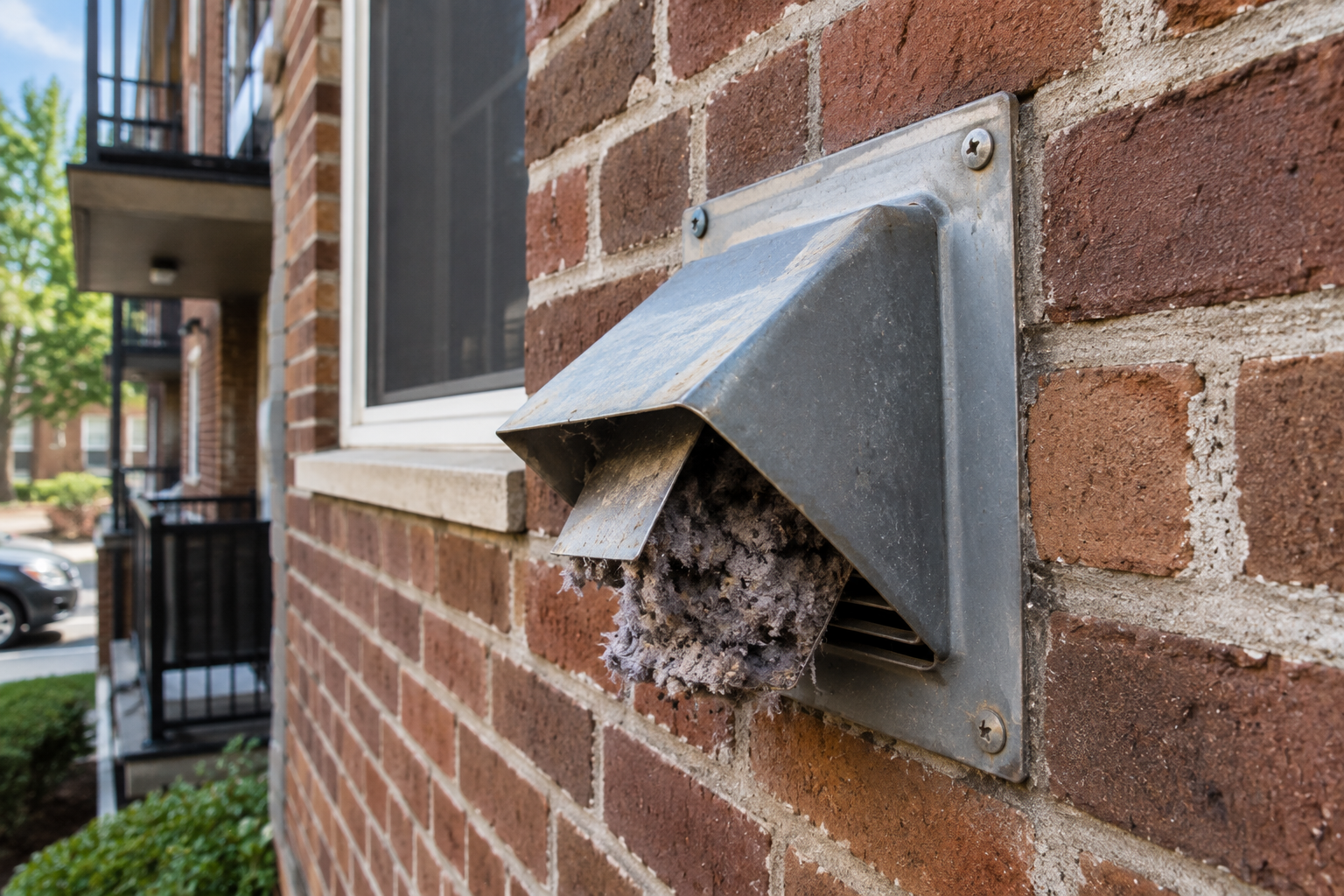
A blocked exterior hood. Lint, a bird's nest in spring or ice and snow in winter can hold the outside flap closed.
A quick test: run the dryer on high heat and go outside to the vent hood. You should feel a strong, warm stream of air pushing the flap fully open. A weak, barely warm trickle means a dryer vent restriction somewhere between the machine and the outside wall.
Why Yonkers Homes Are Prone to Vent Problems
Yonkers has a large stock of older two-family and multi-family homes, many converted over the decades, along with plenty of apartment buildings and houses with laundry in the basement. Dryers in those spaces are often a long way from an exterior wall. The vent may snake across a basement ceiling, through a joist bay and out through a foundation wall, sometimes with four or five elbows along the way. Residential codes typically limit a dryer duct to about 35 feet, reduced for every bend, unless the manufacturer allows more — and many older installations were never built to that standard.
Winter adds another layer. When a long duct passes through an unheated basement or crawl space, the warm, humid exhaust cools on the way out and condenses inside the pipe. Wet lint sticks to the walls and builds up faster than it would in a short, warm run. The same thing happens in older homes in Pelham, Eastchester and New Rochelle where laundry was added to a basement long after the house was built.
The Fire-Safety Side of a Slow Dryer
A slow dryer is an inconvenience; a restricted one is a hazard. According to the U.S. Fire Administration, failure to clean was the leading factor contributing to the ignition of home clothes dryer fires from 2018 to 2020, at 31 percent. The agency recommends cleaning the lint filter every time you use the dryer and cleaning the vent ductwork every year.
Dryers have safety devices for exactly this reason. A cycling thermostat regulates temperature, a high-limit thermostat shuts the heat off if it climbs too high, and a one-time thermal fuse cuts power to the heat source or motor if the dryer overheats. If your dryer suddenly stops heating, or stops running altogether, a blown dryer thermal fuse is a common culprit — and a thermal fuse that blows is almost always a symptom of restricted airflow, not the root problem. Replacing the fuse without fixing the vent means it will blow again, and the next overheating event may not end so safely.
Warning signs to act on right away:
The top or sides of the dryer are too hot to keep a hand on.
Clothes come out unusually hot but still damp.
You notice a burning smell, or the laundry room gets noticeably humid.
The dryer shuts itself off partway through a cycle.
If you smell burning, stop the dryer and unplug it or switch off its breaker. An electrical burning smell from any appliance qualifies for our 24/7 emergency service.
When the Airflow Checks Out: Mechanical Causes
If the vent is clear and the exhaust is strong but the dryer still takes too long to dry, the fault is inside the machine. Common causes include:
A weak or failed heat source
On an electric dryer, a heating element with a break in it may heat partially or not at all. On a gas dryer, a weak igniter or failing gas valve coils can let the burner light, drop out and relight, so the drum never gets fully hot. If your dryer isn't producing any heat at all, our guide on a dryer that isn't heating walks through those tests in order.
Dirty moisture sensors
Many dryers use two metal sensor bars inside the drum, usually near the lint screen, to decide when a load is dry. Residue from softener and dryer sheets can fool them into ending the cycle early. Wiping the bars with a little rubbing alcohol on a cloth often fixes an auto-dry cycle that quits too soon.
Worn drum seals or a slipping belt
Worn felt seals at the front or rear of the drum let air leak in around the drum instead of through the clothes. A belt that has stretched may slip and slow the tumble. Both typically come with a new squeal or thumping sound.
The washer isn't doing its share
Sometimes the dryer is fine. If your washer isn't spinning fast enough, it leaves the load dripping, and even a healthy dryer takes much longer. If towels come out of the washer heavier than usual, have the washer checked too.
What We Do on a Yonkers Dryer Repair Visit
A proper Yonkers dryer repair starts with the whole system, not just the cabinet. Our technician measures exhaust airflow, inspects the transition duct and the visible vent path, and then tests the heat source, thermostats and thermal fuse for continuity. If the vent run itself needs to be rerouted or professionally cleaned, we will tell you plainly rather than replacing parts that will fail again. You receive a written estimate before any work starts, nothing is billed until you approve it, and every repair carries our 12-month parts-and-labor warranty.
We service gas and electric dryers from the major brands, including stacked units and full-size pairs. Learn more about our dryer repair service or browse common symptoms on our dryer troubleshooting page.
Book Westchester Dryer Repair Today
SOS Appliance Repair handles Westchester dryer repair in Yonkers, Mount Vernon, New Rochelle, Pelham, Eastchester and across Westchester and Rockland counties in New York, Bergen, Passaic and Morris counties in New Jersey, and Fairfield County in Connecticut. If your dryer takes too long to dry, runs hot or shuts off early, call (800) 631-0109 or book online. Book before 2 PM and same-day appointments are available.
For coverage, arrival windows and local notes, see our pages on appliance repair in Yonkers and appliance repair in New Rochelle.
- dryer takes too long to dry
- dryer vent restriction
- dryer thermal fuse
- Westchester dryer repair