Local Guides
Dryer Repair in Wayne NJ: Vents, Gas Dryers and Flood Safety
By Michael Smith — Head Technician · October 7, 2026 · 8 min read
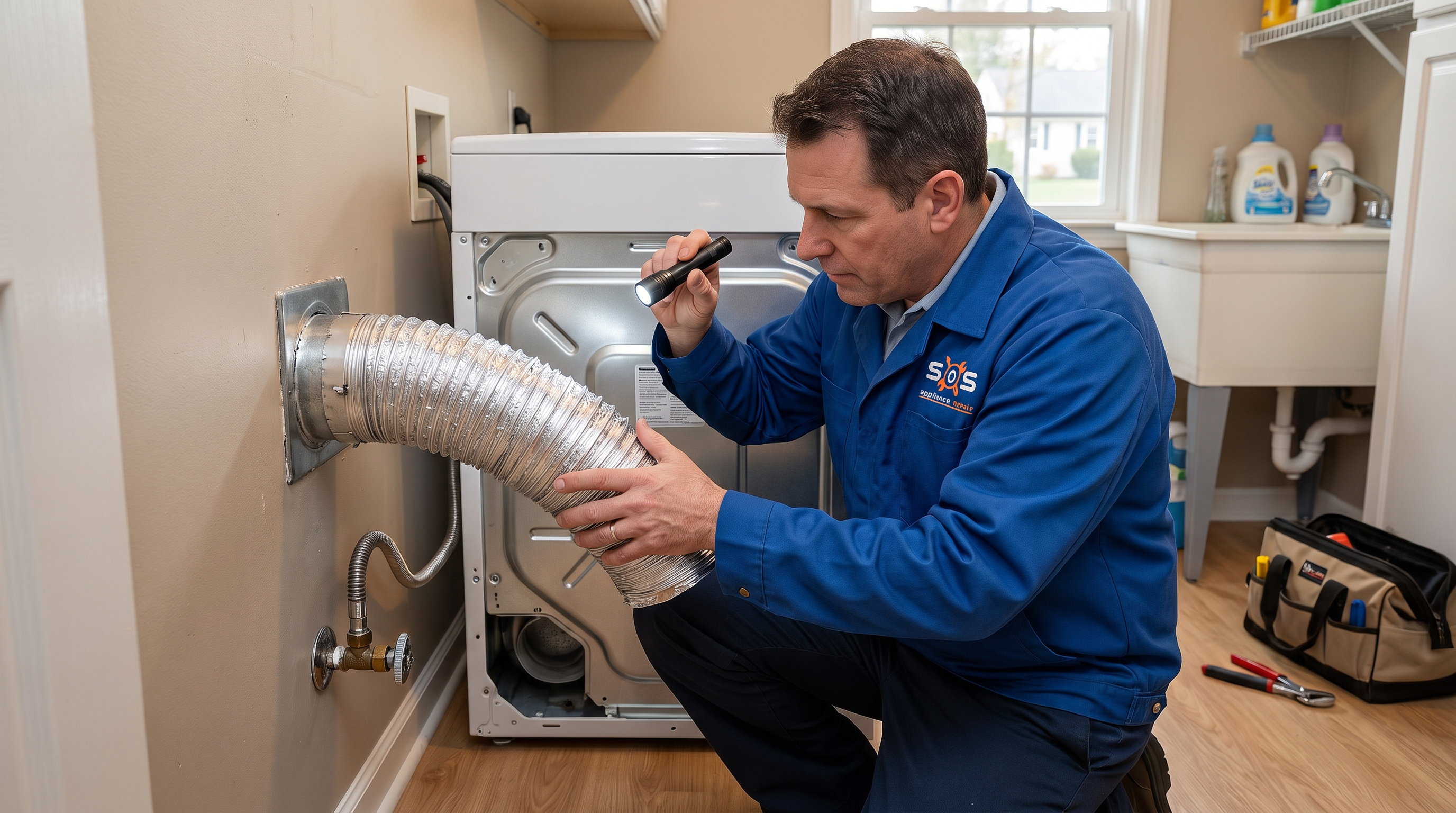
Dryer repair in Wayne NJ usually starts with airflow. A clogged or too-long vent makes a dryer run hot, take two cycles or blow its thermal fuse. Next, electric dryers point to the element or thermostats, gas dryers to the igniter or valve coils. Clean the lint screen and vent hood first. Smell gas? Leave and call PSE&G.
A dryer that tumbles but won't heat, takes two cycles to dry a load of towels, or shuts off halfway through is one of the most disruptive breakdowns in a busy house. The good news is that the cause is often outside the dryer itself, in the vent that carries hot, damp air out of the house. This guide to dryer repair in Wayne NJ explains how to tell an airflow problem from a failed part, what changes with a gas dryer, and what to do if floodwater reached your laundry room. It applies to homes in Wayne, Totowa, Little Falls, Pompton Lakes and Hawthorne.
Dryer smells like burning or stopped heating? Stop using it and call (800) 631-0109. We're available 7 days a week from 7 AM to 9 PM, and same-day appointments are available when you book before 2 PM.
Start With the Vent, Not the Dryer
A dryer moves a large volume of hot, moist air through a duct to the outside. When lint builds up in that duct, or the duct is crushed or too long, the air can't escape fast enough. Drying times stretch, the cabinet runs hot, and safety devices inside the dryer start to trip. Many "broken" dryers are really suffocating ones.
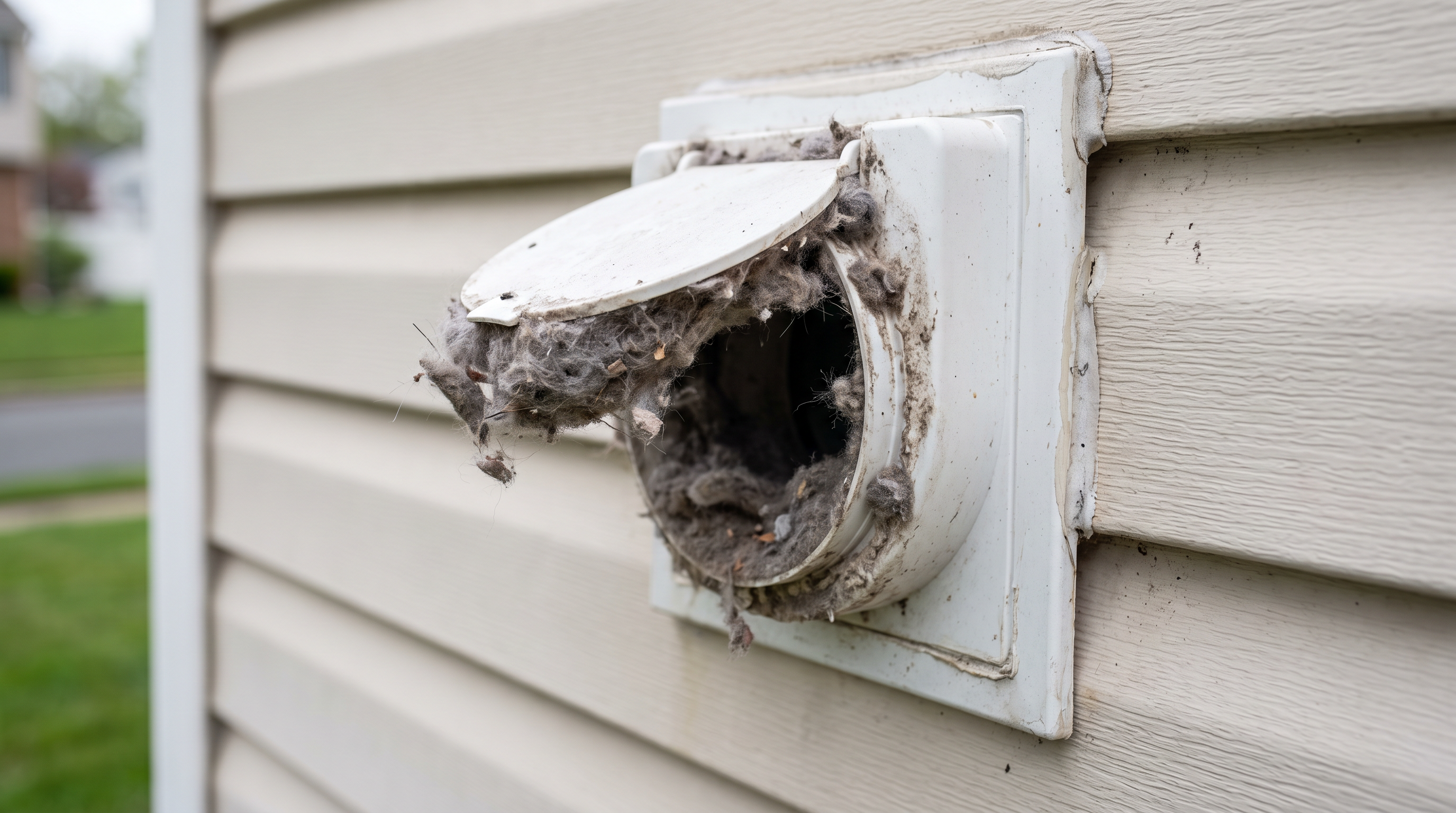
It's also a safety issue. The U.S. Fire Administration lists failure to clean as the leading factor in home clothes dryer fires. October's Fire Prevention Week is a good reminder to check yours. Try this simple test: run the dryer on high heat, then go outside to the vent hood. You should feel a strong, warm stream of air and see the flap open fully. A weak puff, or a flap packed with lint, means the vent needs attention before anything else.
Length matters too. The International Residential Code limits a dryer exhaust duct to 35 feet from the dryer to the outside, and that limit is reduced for every elbow, unless the dryer manufacturer allows a longer run. In many split-levels and colonials, the laundry sits in a basement or on a lower level, so the duct may travel a long way and turn several corners before it reaches an outside wall. A run that is over the limit will keep collecting lint no matter how often it's cleaned.
Look at the duct behind the dryer as well. Thin white vinyl or foil tubing is a fire risk and should be replaced with rigid or semi-rigid metal duct. It should run as straight and short as possible, without sagging loops where lint can settle.
Dryer Not Heating: Gas or Electric?
When a dryer is not heating and the vent is clear, the type of dryer decides where to look next. The label inside the door or on the back panel tells you which you have, and a gas dryer will have a gas line connected behind it.
Electric dryers
Electric dryers run on a 240-volt circuit with a double breaker. If one side of that breaker trips, the drum can keep turning while the heat stops completely, so check the panel first. Inside the dryer, the usual causes are a failed heating element, a blown thermal fuse, or a failed high-limit or cycling thermostat. A thermal fuse is a one-time safety device: if it blew, something made the dryer overheat, and that cause, very often the vent, has to be fixed along with the fuse.
Gas dryers
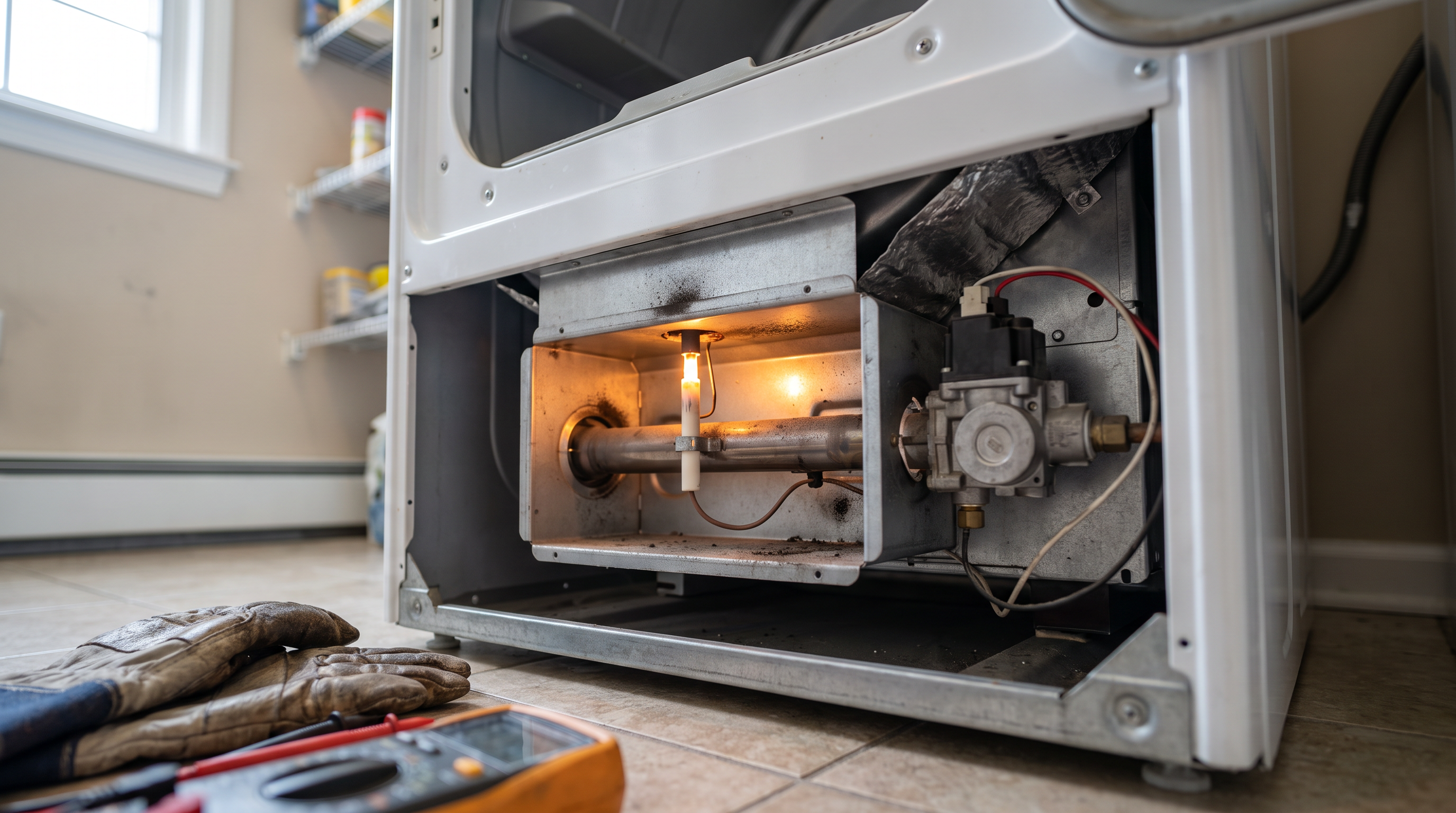
Gas dryer repair follows a different path. When a gas dryer calls for heat, a glow-bar igniter heats up, the gas valve coils open the valve, and a flame sensor confirms the flame. If you can see the burner through a small window or access panel, watch it while the dryer starts:
The igniter doesn't glow: the igniter, a thermal fuse or a thermostat in its circuit has likely failed.
The igniter glows but no flame appears: the gas valve coils are a common cause, provided the gas supply valve behind the dryer is open.
The flame lights and then goes out early: look at the flame sensor and at airflow.
Don't take a gas dryer apart beyond the lint screen and the vent. Gas connections and burner parts are a job for a technician. In Wayne, both gas and electric service come from PSE&G. If you ever smell gas, don't touch switches or appliances on the way out, leave the house, and call PSE&G at 1-800-880-7734 or 911 from outside.
Noises, Sudden Stops and Long Cycles
Not every dryer problem is about heat. A few other symptoms point to specific parts:
Squealing: a worn idler pulley or drum support rollers.
Thumping with every rotation: rollers with flat spots, often after the dryer sat unused or was overloaded.
Scraping or grinding: worn drum glides or felt seals, or a coin or button caught between the drum and the cabinet.
The drum doesn't turn but the motor hums: a broken drive belt or a failing motor. Unplug the dryer rather than letting it hum.
Stopping mid-cycle: often overheating that trips a thermal cutoff, which brings you back to the vent.
Cycles that never seem to end: on sensor-dry models, the moisture sensor bars inside the drum get coated with residue from dryer sheets and softener. Wipe them with a soft cloth and a little rubbing alcohol.
Our guide to a dryer that won't heat walks through these checks in more detail for every brand.
After a Flood: Don't Restart a Wet Dryer
Three rivers run through and along Wayne, the Passaic, the Pompton and the Ramapo, and flooding along them is a long-standing problem. Through FEMA-funded programs, the township has bought out hundreds of flood-prone homes in neighborhoods such as Hoffman Grove. Little Falls and Totowa also sit along the Passaic River, and basements in low-lying parts of all these towns have taken on water in major storms.
If water reached your dryer, don't run it. Floodwater can get into the motor, the controls and the wiring, and on a gas dryer it can reach the gas valve and burner. Ready.gov's flood guidance is clear that you shouldn't touch electrical equipment that is wet or if you're standing in water. Once the area is dry and safe, keep the dryer unplugged, make sure the gas supply valve is closed, and have it inspected before you use it again. The same goes for a washer that sat in water; our emergency washer leak guide covers what to do first.
Dryer Vent Cleaning and Upkeep Checklist
Regular dryer vent cleaning prevents most of the problems in this guide. A simple routine covers the rest:
Clean the lint screen before or after every load.
Wash the lint screen with warm, soapy water every few months, since dryer-sheet residue can clog the mesh even when it looks clean.
Clean the full vent run at least once a year, more often for a large household or a long run.
Check the outside vent hood every season for lint, nests and a flap that sticks.
Replace any vinyl or foil duct with metal duct.
Don't overload the drum; clothes need room to tumble.
Never leave a dryer running when nobody is home or everyone is asleep.
Repair or Replace?
Most dryer repairs are straightforward and well worth doing. Belts, rollers, idler pulleys, thermal fuses, thermostats, heating elements, igniters and gas valve coils are all common parts. The decision gets harder when an older dryer needs a main control board or a motor, or when the drum or cabinet is damaged. If you do replace, an ENERGY STAR certified dryer uses about 20 percent less energy than a conventional model, according to the program. Whatever you choose, have the vent checked at the same time, because a new dryer on a blocked vent will suffer the same problems.
What Happens on a Visit
Our technician starts with the airflow, checking the vent, the duct and the outside hood, then tests the heating system, sensors, motor and drive parts. You get a written estimate before any work begins, nothing is billed until you approve it, and every repair carries a 12-month parts-and-labor warranty. If the vent run turns out to be the root cause, you'll know before you pay for any part.
Book Dryer Repair in Wayne NJ
SOS Appliance Repair provides Passaic County dryer repair in Wayne, Totowa, Little Falls, Pompton Lakes and Hawthorne, along with Clifton, Paterson and the rest of the county, plus Bergen and Morris counties. We repair gas and electric dryers from Whirlpool, Maytag, LG, Samsung, GE, Electrolux and other major brands. See our dryer repair service and the symptoms on our dryer page, then call (800) 631-0109 or book online. We work 7 days a week from 7 AM to 9 PM, and booking before 2 PM gives you same-day availability.
For coverage and local notes elsewhere in the county, see our pages on appliance repair in Clifton and appliance repair in Paterson.
- dryer not heating
- dryer vent cleaning
- gas dryer repair
- Passaic County dryer repair