Brand Guides
Westchester Sub-Zero Repair: 7 Built-In Fridge Warning Signs
By hsan jaraya, Owner & Lead Technician · September 29, 2026 · 8 min read
EPA 608 Universal · Sub-Zero Factory Certified
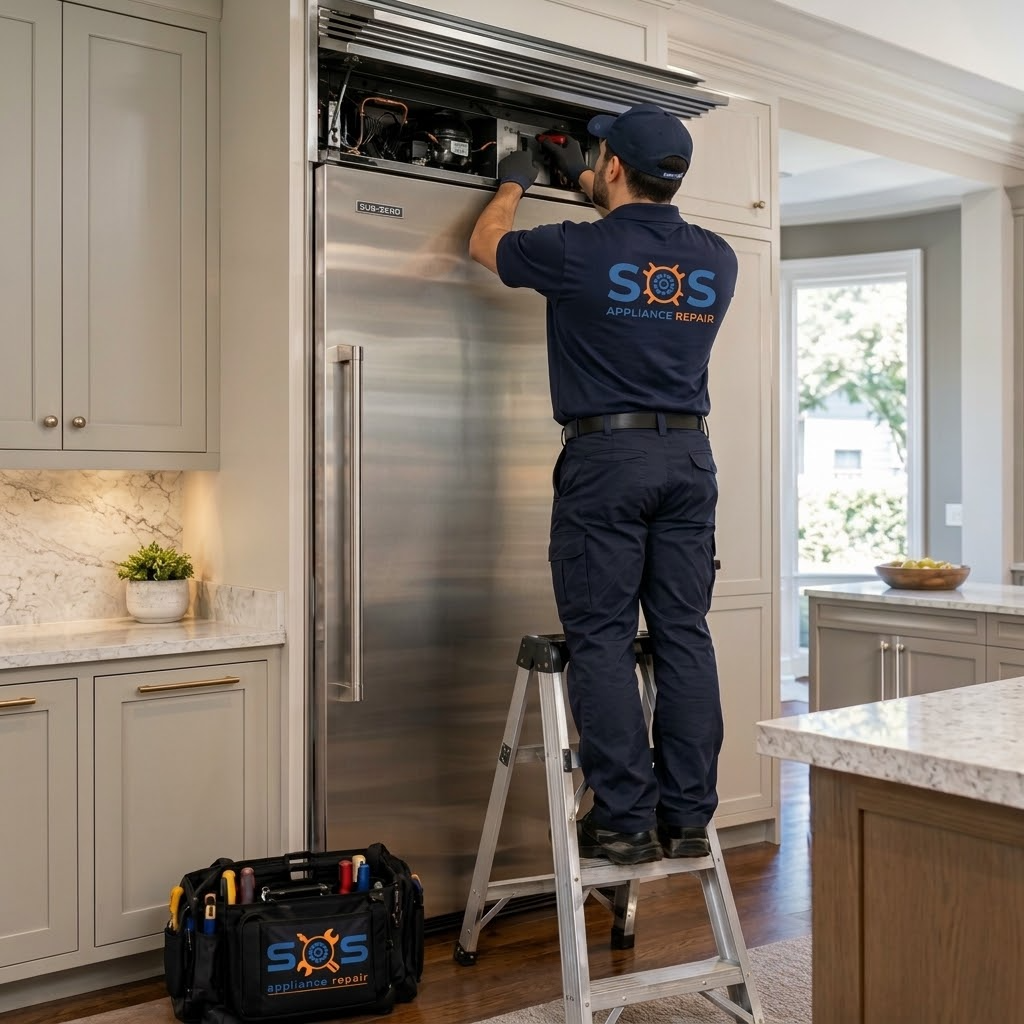
Westchester Sub-Zero repair usually starts with one of seven signs: a warm fresh-food section, a compressor that never stops, sweating at the door, water under the unit, new noises, slow ice production or a service indicator. Check power, settings, the top grille and the door seal first; sealed-system faults need an EPA 608 certified technician.
A Sub-Zero is built to run for decades, which is exactly why most owners in Westchester would rather repair one than replace it. When a built-in starts running warm, sweating at the door or cycling loudly, Westchester Sub-Zero repair is usually a matter of catching one worn component before it drags others down with it. Across Scarsdale, Bronxville, Rye, Larchmont and Harrison, many of these units went in during kitchen renovations twenty or more years ago, and they are now reaching the age where specific parts wear out in a fairly predictable order.
Is your Sub-Zero running warm right now? Call (800) 631-0109. Refrigeration failures are answered around the clock across Westchester, and standard visits are same-day when you book before 2 PM.
This guide walks through the seven warning signs we see most often on a Sub-Zero built-in refrigerator, what you can safely check yourself, and when the problem needs a technician with sealed-system certification.
Why a Sub-Zero Built-In Fails Differently From a Standard Fridge
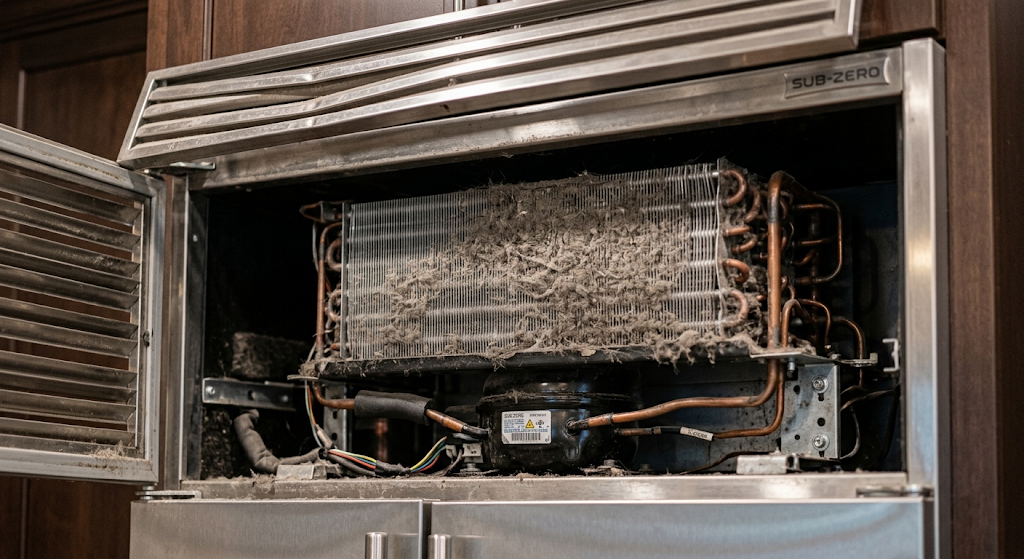
Most Sub-Zero built-ins place the compressor and condenser at the top of the unit, behind the grille, rather than underneath like a freestanding refrigerator. That design keeps the cabinet flush with your millwork, but it means the machinery breathes through one narrow opening. Anything that restricts that grille — dust, a decorative panel fitted too tightly, a renovation that left drywall dust throughout the kitchen — makes the compressor run longer and hotter than it should.
Current Sub-Zero models also use what the company calls dual refrigeration: separate cooling systems for the fresh-food and freezer sections. That keeps odors from crossing over and holds humidity better, but it changes the diagnosis. On a typical single-system fridge, a warm fresh-food section with a cold freezer usually points to an airflow or defrost problem. On a dual-refrigeration Sub-Zero, it can mean one of the two systems has a fault of its own, so the troubleshooting path is different.
Finally, these units are heavy. Hinges with built-in door closers carry a lot of weight, and when a hinge or closer wears, the door can stop sealing completely even though it looks shut from across the room.
7 Warning Signs Your Sub-Zero Built-In Needs Attention
1. Sub-Zero not cooling on the fresh-food side while the freezer is fine
This is the most common call we get. Check the temperature with an appliance thermometer rather than trusting the display, because the display shows the setting, not always the actual temperature. The FDA recommends keeping a refrigerator at 40°F or below and a freezer at 0°F. If the fresh-food side is creeping into the mid-40s, the cause may be an evaporator fan, a defrost problem, a failed temperature sensor or, on dual-refrigeration models, the fresh-food system itself.
2. The compressor runs constantly and the top grille feels hot
A condenser coated in dust can't shed heat, so the compressor stays on almost continuously. This often shows up as a higher electric bill before it shows up as warm food. Homes with pets, and homes that recently had construction work, clog condensers fastest.
3. Condensation or sweating around the door frame
Moisture on the cabinet face or frost on the freezer ceiling means humid air is getting in. Sometimes the cause is a torn or flattened gasket; on older built-ins it is often a worn hinge closer that no longer pulls the door the last half inch. Westchester's humid July and August weeks make a marginal seal show itself quickly.
4. Water on the floor or under the crisper drawers
Built-ins defrost automatically, and the melt water drains to a pan near the compressor where it evaporates. A clogged drain line sends that water into the cabinet or onto the floor instead. It looks alarming, but it is usually a straightforward repair — as long as it is caught before water reaches the subfloor or the surrounding cabinetry.
5. Clicking, buzzing or a new rattle
A click every few minutes followed by silence can mean the compressor is trying to start and shutting off on overload. A rattle often comes from a fan blade touching ice or a loose fan mount. New sounds are worth reporting early; they are far easier to address before a fan motor or starting component fails outright.
6. The ice maker slows down or makes small, hollow cubes
Small cubes usually trace back to low water supply: a clogged filter, a kinked supply line behind the unit, or a failing water valve. Replace the filter first. If ice production stays low, the problem is further upstream, and our guide to an ice maker that isn't making ice covers the next checks.
7. A flashing service indicator or code on the control panel
Newer Sub-Zero models with electronic controls can display a service indicator when a sensor reads out of range. Write down exactly what the panel shows, along with your model and serial numbers, which are usually on a tag inside the unit near the top. That information lets a technician arrive with the right parts instead of diagnosing on the first visit and returning on a second.
What You Can Safely Check Before Calling
Confirm power. Check the breaker panel. A built-in on a dedicated circuit that trips repeatedly is a symptom in itself, so mention it when you call.
Look at the settings. Make sure nobody switched the unit into Sabbath or showroom mode, or bumped the setpoint while cleaning the panel.
Clear the grille. Remove anything leaning against or blocking the top grille. If your model's grille opens and you are comfortable doing it, switch off the breaker first, then vacuum loose dust from the condenser fins with a soft brush attachment.
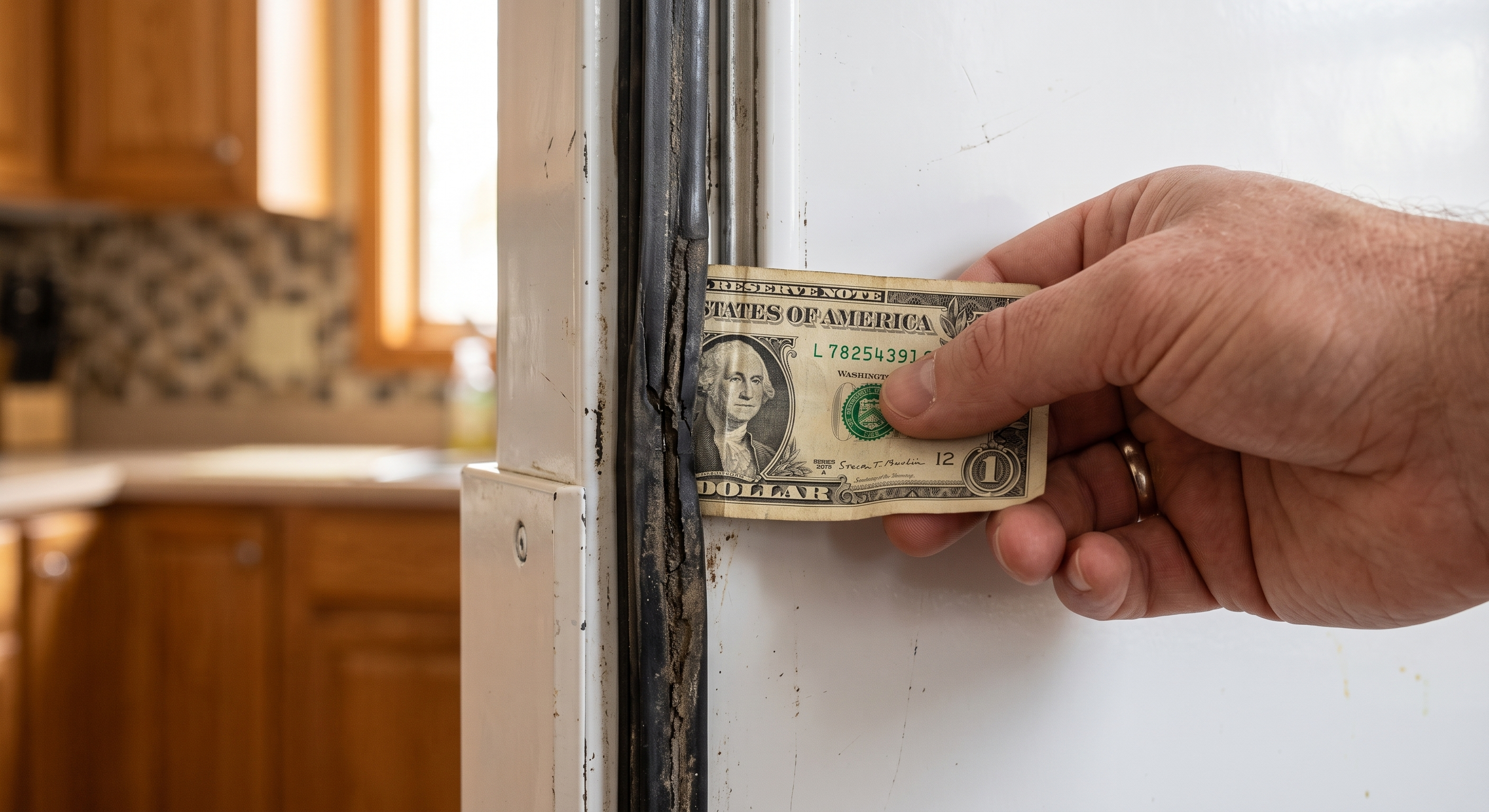
Do the paper test. Close the door on a sheet of paper at several points around the gasket. If it slides out with no resistance, that section isn't sealing.
Replace the water filter if it is past its interval, especially if the ice maker or dispenser has slowed.
Keep the doors closed while you wait. A closed refrigerator holds temperature far longer than one that is opened every few minutes to check on it.
What not to do: don't pry at the sealed system, add refrigerant from a hardware-store kit, or chip ice away from the evaporator with a knife. A punctured evaporator tube turns a modest repair into a sealed-system job.
How Westchester Homes Wear on Built-In Refrigeration
Local conditions matter more than most owners realize. In older Scarsdale and Bronxville colonials and Tudors, kitchens were often renovated around a built-in that has since outlived several dishwashers. Parts for 1990s-era units increasingly need to be ordered rather than pulled off a truck, so we confirm availability before the first visit whenever you give us a model number. Along the Sound in Rye, Larchmont and Mamaroneck, summer humidity runs high, and a gasket that seemed fine in January can start sweating by July. Anywhere in the county, a kitchen renovation that fills the house with fine dust can coat a condenser in a matter of weeks, so it is worth having the coil cleaned once the contractors leave.
These are the details that separate built-in refrigerator repair from ordinary fridge service. The cabinetry, the panel fit and the ventilation path all affect how the unit performs, and a good diagnosis accounts for the installation, not just the appliance.
Warranty, Certification and Sealed-System Work
Before booking anyone, check whether your unit is still under Sub-Zero's warranty. The company's sealed-system coverage runs longer than its general coverage, and manufacturers generally reimburse only their own authorized service network. If warranty is likely to cover your repair, we will tell you, even if that means you end up calling someone else.
Sealed-system repairs — a refrigerant leak, a failed compressor, a restricted line — must be handled by a technician certified under EPA Section 608. Every SOS Appliance Repair refrigeration technician holds Universal 608 certification, which covers the full range of refrigeration equipment we service.
What a Westchester Sub-Zero Repair Visit Looks Like
When you book Westchester Sub-Zero repair with us, the technician starts with the symptoms you have noticed and the unit's history, then tests components in the order they typically fail rather than replacing parts on a guess. You receive a written estimate before any work begins, and nothing is billed until you approve it. Every repair is backed by our 12-month parts-and-labor warranty, and our refrigerator repair service covers other built-in and freestanding brands as well.
If the unit has stopped cooling entirely and food is at risk, don't wait for a routine appointment. Our emergency line is answered around the clock for refrigeration failures. For general troubleshooting on any brand, see our guide to why a fridge stops cooling.
Book Sub-Zero Service in Westchester and Beyond
SOS Appliance Repair has served homeowners since 2011 across Westchester and Rockland counties in New York, Bergen, Passaic and Morris counties in New Jersey, and Fairfield County in Connecticut. If your Sub-Zero in Scarsdale, Rye, Bronxville, Larchmont, Mamaroneck or Harrison is showing any of the signs above, call (800) 631-0109 or book online. Same-day appointments are available when you book before 2 PM, and you will know the cost before any work starts. Looking for dependable Scarsdale appliance repair on other brands? The same team handles those too.
For coverage, arrival windows and local notes, see our page on appliance repair in Scarsdale.
- Sub-Zero built-in refrigerator
- built-in refrigerator repair
- Sub-Zero not cooling
- Scarsdale appliance repair